Tropical Depression Five:
As the storm moves inland, stay informed and access
last-minute preparedness tips.
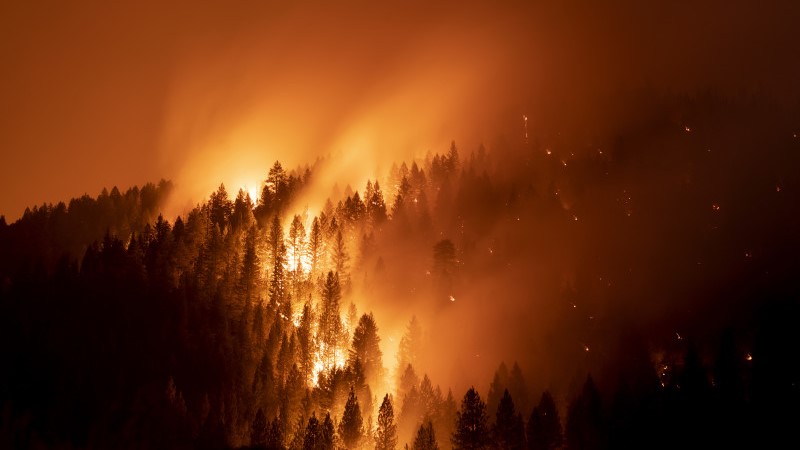
Wildfires are no longer confined to specific seasons or geographic areas—they’re a growing, year-round threat impacting communities across the United States. For mission-driven organizations such as houses of worship, nonprofits, human services organizations, camps and conference centers, sports and outdoor recreation groups, and educational institutions, the risk is real and rising.
Whether your organization operates in a high-risk zone or simply wants to be prepared, this guide offers the tools and knowledge to help reduce exposure and respond effectively.
Wildfires are intensifying due to a combination of key factors, including:
These factors contribute to more frequent and severe wildfires, threatening lives, operational continuity, ecosystems and public health.
Organizations that serve communities, provide essential services or host gatherings in wildfire-prone areas play a vital role during emergencies. Their ability to prepare not only protects their own operations but also strengthens community resilience and recovery.
Wildfire readiness can help organizations safeguard their facilities, maintain continuity and protect staff, volunteers and those who depend on their services. A proactive approach ensures they remain a trusted resource when it matters most.
Investing in wildfire preparedness isn’t just about protecting your organization, it’s about contributing to the strength and safety of the communities you serve.
Every organization has unique wildfire risks based on its structures, activities and environment. Understanding these specific vulnerabilities is the first step toward building resilience and ensuring continuity in the face of disaster. Here's a closer look at the different types of organizational exposure.
Religious institutions like churches, synagogues, mosques and temples often serve as vital community hubs, hosting regular gatherings and events. Many are housed in older or historic buildings that are more susceptible to wildfire damage and difficult to replace. Their facilities may include outdoor features such as shrines, gazebos and cemeteries, which can be vulnerable to embers and fast-moving flames. Evacuation efforts during services can be difficult due to large crowds, limited exits and potentially outdated fire safety infrastructure.
Nonprofits and human services organizations often operate with limited resources, making wildfire mitigation more challenging. Their facilities may serve vulnerable populations who might need extra assistance during evacuations. Wildfires can severely disrupt essential services like food distribution, housing support and crisis counseling. Limited emergency training and communication systems can also hinder response efforts and losing a facility can have lasting impacts on the community.
Camps and conference centers are often located in forested or rural areas, making them highly vulnerable to wildfires. Their buildings—often cabins, lodges and other wood-framed structures—are highly flammable and may lack modern fire suppression systems. These sites may also have limited access roads, making evacuation and emergency response more problematic. Seasonal operations often coincide with peak wildfire months, and staff may lack well established or regularly practiced emergency training.
Sports and outdoor recreation organizations may rely on open-air facilities and natural landscapes that are easily damaged by fire or obstructed by smoke or debris. Large events can become chaotic without clear emergency communication and evacuation plans. Equipment and structures such as bleachers, scoreboards and storage sheds are often made of flammable materials and may not be insured at full replacement value. Additionally, these organizations may not have permanent staff on-site, which can delay response times and complicate coordination with emergency services. Wildfire disruptions can impact both revenue and community engagement.
Schools and educational institutions face unique challenges when it comes to wildfire preparedness. Evacuating children requires careful planning, supervision and coordination, especially for younger students or those with special needs. Transportation logistics, such as bus routes and parent pick-up procedures, must be clearly defined and practiced. Schools located in suburban or semi-rural areas face increasing wildfire risk, and older buildings may lack fire-resistant upgrades. Even if a wildfire does not directly impact the school, smoke and poor air quality can force closures and disrupt learning. Schools also serve as community hubs, and their closure can affect not just students, but families and local support systems.
Understanding your organization's wildfire risk is only the first step—taking action is what truly helps to protect your people, property and purpose. Whether you're a school in a semi-rural area, a camp nestled in the woods, a house of worship occupying a longstanding building or a nonprofit serving vulnerable populations, proactive planning can make all the difference. The following 10 Essentials of Wildfire Preparedness and Prevention offer a foundational checklist for wildfire preparedness that applies across mission-driven organizations.
Understanding your wildfire risk begins with assessing your location’s vulnerability. Use tools like FEMA’s Wildfire Risk Index, local fire maps and expert input from fire authorities. Consider environmental factors such as nearby vegetation, prevailing wind patterns and historical fire activity in your region. This data helps you identify high-risk zones and prioritize mitigation efforts. A thorough risk assessment is the foundation of any effective wildfire preparedness strategy.
Defensible space is a critical buffer zone that can slow or stop the spread of wildfire toward your facility. Clear vegetation, dead plants and debris within at least 30 feet of all structures to reduce fuel sources. Regularly trim trees, prune overhanging branches and maintain open areas around buildings. These actions not only protect property but also improve access for emergency responders.
Facility hardening means upgrading your buildings to withstand wildfire conditions and related disruptions. Use fire-resistant materials for roofs, siding and vents, install ember-resistant vents and spark arrestors, and seal gaps where embers could enter. Because wildfires often cause power outages and water supply interruptions, consider adding a backup generator and alternative water sources to maintain critical operations and fire suppression capabilities. These measures can help improve your facility’s resilience during a wildfire.
A comprehensive wildfire preparedness plan ensures your organization is ready to respond quickly and effectively. Include detailed evacuation procedures, communication protocols and clearly defined roles for staff and volunteers. Conduct regular drills to test the plan and make necessary updates. A well-practiced plan can save lives and minimize disruption during a wildfire emergency.
Staying informed about wildfire conditions is essential for timely decision-making. Use NOAA weather radios, mobile apps and local emergency alert systems to receive real-time updates. Monitoring fire weather, wind shifts and evacuation notices allows your organization to act quickly. Early awareness is key to protecting people and property.
Evacuation readiness involves more than just knowing the exits—it requires clear planning and regular practice. Visibly mark evacuation routes and ensure they are accessible to all individuals, including those with mobility constraints. Stock emergency kits with essential supplies and establish a reunification plan for staff, volunteers and visitors. Practicing these procedures builds confidence and reduces chaos during an actual emergency.
Preventing wildfires starts with minimizing potential ignition sources around your facility. Avoid outdoor burning and restrict open flames during dry or windy conditions, and if burning is permitted, maintain a safe distance—at least 10 feet from anything flammable for small fires and 25 feet or more for larger campfires, as recommended by the National Fire Protection Agency. Regularly inspect and maintain electrical systems to ensure they meet safety standards. These precautions help reduce the likelihood of accidental fires starting on your property.
Proper storage of flammable materials is vital to reducing fire risk. Keep gasoline, propane and other combustibles in approved containers, away from buildings and heat sources. Store them in cool, ventilated areas with clear signage and restricted access. Safe storage practices protect your facility and reduce the chance of fire-related accidents.
Building relationships with local fire departments enhances your organization’s preparedness and response capabilities. Invite fire officials to conduct site assessments and provide training for your staff. Participate in community wildfire protection planning to align your efforts with broader emergency strategies. Collaboration ensures faster, more coordinated responses during a wildfire event.
Raise awareness among staff, volunteers and visitors. Share safety tips, host workshops and encourage personal preparedness.
These essential strategies offer a strong foundation for reducing wildfire risk and protecting what matters most. By taking proactive steps today, your organization can be better prepared to respond tomorrow—ensuring safety, continuity and peace of mind for those you serve.
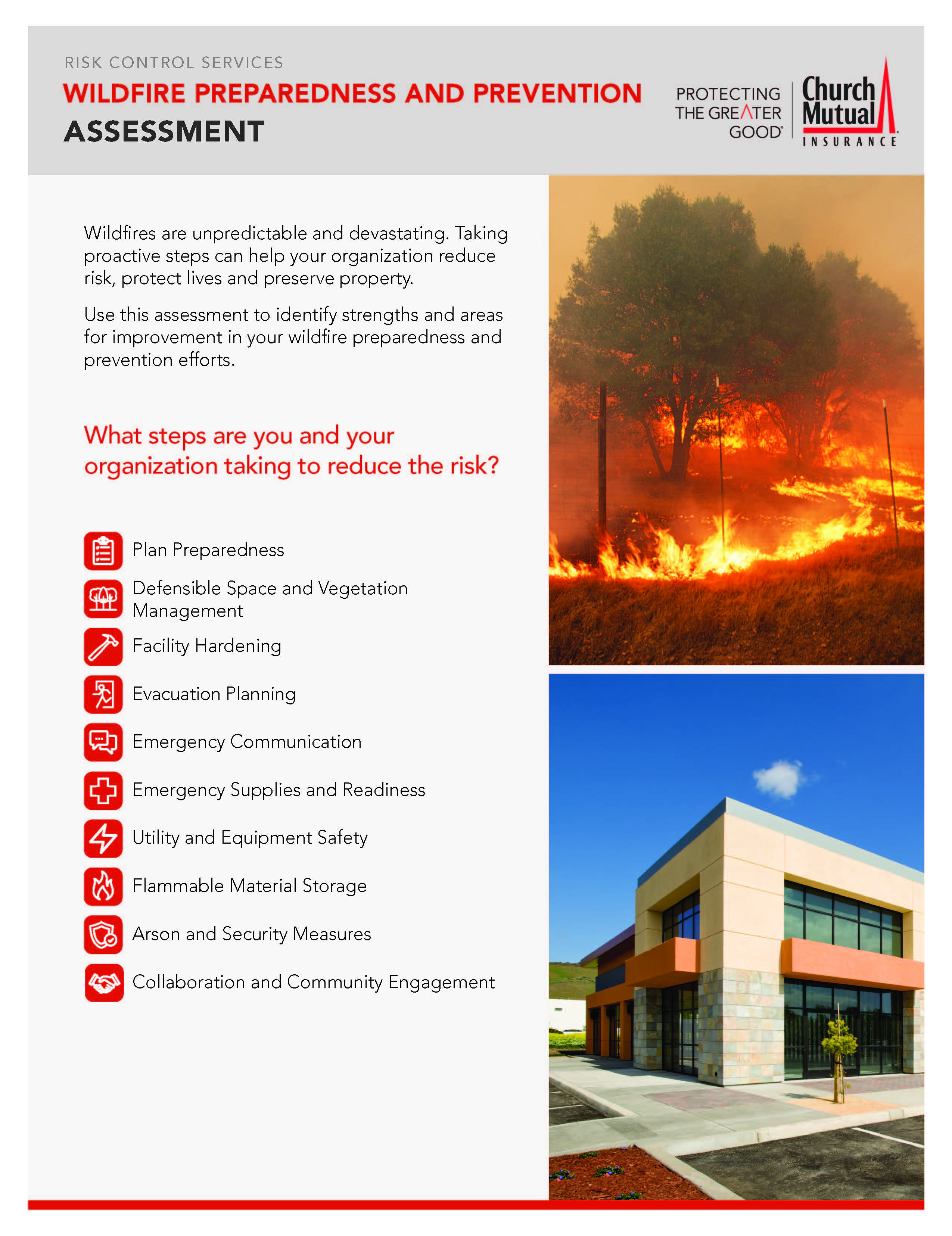
Once your organization understands the essentials of wildfire preparedness, the next step is to assess how well those practices are being implemented. The Wildfire Preparedness and Prevention Assessment is a practical tool designed to help mission-driven organizations identify strengths and gaps in their current wildfire readiness efforts.
Using a simple rating scale—done consistently, needs improvement or not done—organizations can evaluate their preparedness across 10 key categories.
Assess your location’s risk, monitor fire conditions and consult with local fire authorities.
Maintain clear zones around structures and manage vegetation to reduce fire spread.
Use fire-resistant materials, seal gaps, keep roofs and gutters clear of debris and install metal mesh screening on gutters and vent openings to block embers.
Develop building-specific plans, mark routes and train staff and volunteers.
Ensure reliable communication tools, maintain contact lists and designate a spokesperson.
Stock and maintain emergency kits, plan for mobility issues and conduct regular drills.
Inspect electrical systems, store generators safely and protect critical equipment.
Store flammables in approved containers away from buildings and secure fuel-powered equipment.
Enhance visibility, secure tools and coordinate with law enforcement.
Work with local fire departments, share safety information and promote personal preparedness.
This assessment can help empower your organization to take a proactive, structured approach to wildfire safety. Don’t wait for a crisis—use this tool to guide your next steps and strengthen your organization’s resilience.
Preparedness doesn’t end with planning—it requires consistent action. A Wildfire Maintenance Plan helps organizations stay proactive year-round by reducing fuel sources, maintaining defensible space and keeping facilities clear of hazards that could accelerate fire spread. Regardless of whether your organization is located in a high-risk zone, regular upkeep is essential to helping to protect your property and the people who rely on it.
0–5 feet from buildings:
5–30 feet from buildings:
0–30 feet overall:
Establish a wildfire maintenance committee and schedule regular debris removal throughout the year, with increased attention before and during wildfire season. This ongoing effort reinforces your preparedness plan and ensures your facility remains as fire-resistant as possible.
Once your organization has assessed its wildfire preparedness and implemented a maintenance plan, the next step is to test your readiness in action. A Wildfire Preparedness Tabletop Exercise is a low-risk, discussion-based simulation that helps teams walk through wildfire scenarios, clarify roles and identify gaps in response procedures.
Preparation:
Execution:
Conclusion:
Sample scenario highlights
Discussion prompts include:
To ensure the effectiveness of your tabletop exercise, use the Wildfire Preparedness Exercise Evaluation tool to rate your organization’s performance across three phases:
This structured evaluation helps transform insights from the exercise into actionable improvements, ensuring your organization is better prepared for real-world wildfire threats.
Church Mutual’s CM Wildfire Solutions™ program offers a comprehensive, no-cost approach to wildfire risk management for eligible policyholders in high-risk states. Designed to help organizations prepare for, respond to and recover from wildfire threats, the program combines cutting-edge technology, expert support and coordinated emergency services.
Here’s how the program works
This program reflects Church Mutual’s commitment to protecting mission-driven organizations and the communities they serve. By combining technology, field expertise and emergency coordination, CM Wildfire Solutions™ empowers organizations to act decisively when wildfire risk is at its highest.
Wildfire preparedness can help protect lives, property and the continuity of essential services. For organizations serving vulnerable populations or operating in remote areas, proactive planning is critical to safety and resilience.
Factors like location near forested areas, older building materials, limited evacuation routes and outdoor structures can increase wildfire risk. Conducting a risk assessment helps identify specific vulnerabilities.
Defensible space is the buffer zone between your facility and surrounding vegetation. Maintaining this space—typically 30 feet—can slow or stop the spread of wildfire and improve firefighter access.
Review and update your plan annually or whenever there are changes to your facility, staffing or local fire risk. Regular drills and tabletop exercises help ensure the plan remains effective.
Your plan should include evacuation routes, transportation logistics, assembly areas, communication protocols and accommodations for individuals with disabilities or mobility issues.
Stock emergency kits with water, masks, flashlights, first aid supplies and communication tools. Ensure kits are accessible and checked regularly for expiration or damage.
Use tools like NOAA weather radios, local emergency alert systems and services like REDZONE for 24/7 wildfire monitoring and early detection.
CM Wildfire Solutions™ is a no-cost program for eligible Church Mutual policyholders that offers wildfire alerts, on-site risk assessments and emergency mitigation services like fire-retardant gel and temporary sprinklers.
Use structured assessments and tabletop exercises to test your response plan, identify gaps and set improvement goals. Evaluation tools help track progress and readiness over time.
Church Mutual’s Risk Control Central offers expert guidance, resources and support tailored to your organization’s needs. Contact them at RiskConsulting@churchmutual.com or (800) 554-2642 EXT. 5213.


Wildfires are no longer confined to specific seasons or geographic areas—they’re a growing, year-round threat impacting communities across the United States. For mission-driven organizations such as houses of worship, nonprofits, human services organizations, camps and conference centers, sports and outdoor recreation groups, and educational institutions, the risk is real and rising.
Whether your organization operates in a high-risk zone or simply wants to be prepared, this guide offers the tools and knowledge to help reduce exposure and respond effectively.
Wildfires are intensifying due to a combination of key factors, including:
These factors contribute to more frequent and severe wildfires, threatening lives, operational continuity, ecosystems and public health.
Organizations that serve communities, provide essential services or host gatherings in wildfire-prone areas play a vital role during emergencies. Their ability to prepare not only protects their own operations but also strengthens community resilience and recovery.
Wildfire readiness can help organizations safeguard their facilities, maintain continuity and protect staff, volunteers and those who depend on their services. A proactive approach ensures they remain a trusted resource when it matters most.
Investing in wildfire preparedness isn’t just about protecting your organization, it’s about contributing to the strength and safety of the communities you serve.
Every organization has unique wildfire risks based on its structures, activities and environment. Understanding these specific vulnerabilities is the first step toward building resilience and ensuring continuity in the face of disaster. Here's a closer look at the different types of organizational exposure.
Religious institutions like churches, synagogues, mosques and temples often serve as vital community hubs, hosting regular gatherings and events. Many are housed in older or historic buildings that are more susceptible to wildfire damage and difficult to replace. Their facilities may include outdoor features such as shrines, gazebos and cemeteries, which can be vulnerable to embers and fast-moving flames. Evacuation efforts during services can be difficult due to large crowds, limited exits and potentially outdated fire safety infrastructure.
Nonprofits and human services organizations often operate with limited resources, making wildfire mitigation more challenging. Their facilities may serve vulnerable populations who might need extra assistance during evacuations. Wildfires can severely disrupt essential services like food distribution, housing support and crisis counseling. Limited emergency training and communication systems can also hinder response efforts and losing a facility can have lasting impacts on the community.
Camps and conference centers are often located in forested or rural areas, making them highly vulnerable to wildfires. Their buildings—often cabins, lodges and other wood-framed structures—are highly flammable and may lack modern fire suppression systems. These sites may also have limited access roads, making evacuation and emergency response more problematic. Seasonal operations often coincide with peak wildfire months, and staff may lack well established or regularly practiced emergency training.
Sports and outdoor recreation organizations may rely on open-air facilities and natural landscapes that are easily damaged by fire or obstructed by smoke or debris. Large events can become chaotic without clear emergency communication and evacuation plans. Equipment and structures such as bleachers, scoreboards and storage sheds are often made of flammable materials and may not be insured at full replacement value. Additionally, these organizations may not have permanent staff on-site, which can delay response times and complicate coordination with emergency services. Wildfire disruptions can impact both revenue and community engagement.
Schools and educational institutions face unique challenges when it comes to wildfire preparedness. Evacuating children requires careful planning, supervision and coordination, especially for younger students or those with special needs. Transportation logistics, such as bus routes and parent pick-up procedures, must be clearly defined and practiced. Schools located in suburban or semi-rural areas face increasing wildfire risk, and older buildings may lack fire-resistant upgrades. Even if a wildfire does not directly impact the school, smoke and poor air quality can force closures and disrupt learning. Schools also serve as community hubs, and their closure can affect not just students, but families and local support systems.
Understanding your organization's wildfire risk is only the first step—taking action is what truly helps to protect your people, property and purpose. Whether you're a school in a semi-rural area, a camp nestled in the woods, a house of worship occupying a longstanding building or a nonprofit serving vulnerable populations, proactive planning can make all the difference. The following 10 Essentials of Wildfire Preparedness and Prevention offer a foundational checklist for wildfire preparedness that applies across mission-driven organizations.
Understanding your wildfire risk begins with assessing your location’s vulnerability. Use tools like FEMA’s Wildfire Risk Index, local fire maps and expert input from fire authorities. Consider environmental factors such as nearby vegetation, prevailing wind patterns and historical fire activity in your region. This data helps you identify high-risk zones and prioritize mitigation efforts. A thorough risk assessment is the foundation of any effective wildfire preparedness strategy.
Defensible space is a critical buffer zone that can slow or stop the spread of wildfire toward your facility. Clear vegetation, dead plants and debris within at least 30 feet of all structures to reduce fuel sources. Regularly trim trees, prune overhanging branches and maintain open areas around buildings. These actions not only protect property but also improve access for emergency responders.
Facility hardening means upgrading your buildings to withstand wildfire conditions and related disruptions. Use fire-resistant materials for roofs, siding and vents, install ember-resistant vents and spark arrestors, and seal gaps where embers could enter. Because wildfires often cause power outages and water supply interruptions, consider adding a backup generator and alternative water sources to maintain critical operations and fire suppression capabilities. These measures can help improve your facility’s resilience during a wildfire.
A comprehensive wildfire preparedness plan ensures your organization is ready to respond quickly and effectively. Include detailed evacuation procedures, communication protocols and clearly defined roles for staff and volunteers. Conduct regular drills to test the plan and make necessary updates. A well-practiced plan can save lives and minimize disruption during a wildfire emergency.
Staying informed about wildfire conditions is essential for timely decision-making. Use NOAA weather radios, mobile apps and local emergency alert systems to receive real-time updates. Monitoring fire weather, wind shifts and evacuation notices allows your organization to act quickly. Early awareness is key to protecting people and property.
Evacuation readiness involves more than just knowing the exits—it requires clear planning and regular practice. Visibly mark evacuation routes and ensure they are accessible to all individuals, including those with mobility constraints. Stock emergency kits with essential supplies and establish a reunification plan for staff, volunteers and visitors. Practicing these procedures builds confidence and reduces chaos during an actual emergency.
Preventing wildfires starts with minimizing potential ignition sources around your facility. Avoid outdoor burning and restrict open flames during dry or windy conditions, and if burning is permitted, maintain a safe distance—at least 10 feet from anything flammable for small fires and 25 feet or more for larger campfires, as recommended by the National Fire Protection Agency. Regularly inspect and maintain electrical systems to ensure they meet safety standards. These precautions help reduce the likelihood of accidental fires starting on your property.
Proper storage of flammable materials is vital to reducing fire risk. Keep gasoline, propane and other combustibles in approved containers, away from buildings and heat sources. Store them in cool, ventilated areas with clear signage and restricted access. Safe storage practices protect your facility and reduce the chance of fire-related accidents.
Building relationships with local fire departments enhances your organization’s preparedness and response capabilities. Invite fire officials to conduct site assessments and provide training for your staff. Participate in community wildfire protection planning to align your efforts with broader emergency strategies. Collaboration ensures faster, more coordinated responses during a wildfire event.
Raise awareness among staff, volunteers and visitors. Share safety tips, host workshops and encourage personal preparedness.
These essential strategies offer a strong foundation for reducing wildfire risk and protecting what matters most. By taking proactive steps today, your organization can be better prepared to respond tomorrow—ensuring safety, continuity and peace of mind for those you serve.
Once your organization understands the essentials of wildfire preparedness, the next step is to assess how well those practices are being implemented. The Wildfire Preparedness and Prevention Assessment is a practical tool designed to help mission-driven organizations identify strengths and gaps in their current wildfire readiness efforts.
Using a simple rating scale—done consistently, needs improvement or not done—organizations can evaluate their preparedness across 10 key categories.
Assess your location’s risk, monitor fire conditions and consult with local fire authorities.
Maintain clear zones around structures and manage vegetation to reduce fire spread.
Use fire-resistant materials, seal gaps, keep roofs and gutters clear of debris and install metal mesh screening on gutters and vent openings to block embers.
Develop building-specific plans, mark routes and train staff and volunteers.
Ensure reliable communication tools, maintain contact lists and designate a spokesperson.
Stock and maintain emergency kits, plan for mobility issues and conduct regular drills.
Inspect electrical systems, store generators safely and protect critical equipment.
Store flammables in approved containers away from buildings and secure fuel-powered equipment.
Enhance visibility, secure tools and coordinate with law enforcement.
Work with local fire departments, share safety information and promote personal preparedness.
This assessment can help empower your organization to take a proactive, structured approach to wildfire safety. Don’t wait for a crisis—use this tool to guide your next steps and strengthen your organization’s resilience.
Preparedness doesn’t end with planning—it requires consistent action. A Wildfire Maintenance Plan helps organizations stay proactive year-round by reducing fuel sources, maintaining defensible space and keeping facilities clear of hazards that could accelerate fire spread. Regardless of whether your organization is located in a high-risk zone, regular upkeep is essential to helping to protect your property and the people who rely on it.
0–5 feet from buildings:
5–30 feet from buildings:
0–30 feet overall:
Establish a wildfire maintenance committee and schedule regular debris removal throughout the year, with increased attention before and during wildfire season. This ongoing effort reinforces your preparedness plan and ensures your facility remains as fire-resistant as possible.
Once your organization has assessed its wildfire preparedness and implemented a maintenance plan, the next step is to test your readiness in action. A Wildfire Preparedness Tabletop Exercise is a low-risk, discussion-based simulation that helps teams walk through wildfire scenarios, clarify roles and identify gaps in response procedures.
Preparation:
Execution:
Conclusion:
Sample scenario highlights
Discussion prompts include:
To ensure the effectiveness of your tabletop exercise, use the Wildfire Preparedness Exercise Evaluation tool to rate your organization’s performance across three phases:
This structured evaluation helps transform insights from the exercise into actionable improvements, ensuring your organization is better prepared for real-world wildfire threats.
Church Mutual’s CM Wildfire Solutions™ program offers a comprehensive, no-cost approach to wildfire risk management for eligible policyholders in high-risk states. Designed to help organizations prepare for, respond to and recover from wildfire threats, the program combines cutting-edge technology, expert support and coordinated emergency services.
Here’s how the program works
This program reflects Church Mutual’s commitment to protecting mission-driven organizations and the communities they serve. By combining technology, field expertise and emergency coordination, CM Wildfire Solutions™ empowers organizations to act decisively when wildfire risk is at its highest.
Wildfire preparedness can help protect lives, property and the continuity of essential services. For organizations serving vulnerable populations or operating in remote areas, proactive planning is critical to safety and resilience.
Factors like location near forested areas, older building materials, limited evacuation routes and outdoor structures can increase wildfire risk. Conducting a risk assessment helps identify specific vulnerabilities.
Defensible space is the buffer zone between your facility and surrounding vegetation. Maintaining this space—typically 30 feet—can slow or stop the spread of wildfire and improve firefighter access.
Review and update your plan annually or whenever there are changes to your facility, staffing or local fire risk. Regular drills and tabletop exercises help ensure the plan remains effective.
Your plan should include evacuation routes, transportation logistics, assembly areas, communication protocols and accommodations for individuals with disabilities or mobility issues.
Stock emergency kits with water, masks, flashlights, first aid supplies and communication tools. Ensure kits are accessible and checked regularly for expiration or damage.
Use tools like NOAA weather radios, local emergency alert systems and services like REDZONE for 24/7 wildfire monitoring and early detection.
CM Wildfire Solutions™ is a no-cost program for eligible Church Mutual policyholders that offers wildfire alerts, on-site risk assessments and emergency mitigation services like fire-retardant gel and temporary sprinklers.
Use structured assessments and tabletop exercises to test your response plan, identify gaps and set improvement goals. Evaluation tools help track progress and readiness over time.
Church Mutual’s Risk Control Central offers expert guidance, resources and support tailored to your organization’s needs. Contact them at RiskConsulting@churchmutual.com or (800) 554-2642 EXT. 5213.
Wildfires are no longer confined to specific seasons or geographic areas—they’re a growing, year-round threat impacting communities across the United States. For mission-driven organizations such as houses of worship, nonprofits, human services organizations, camps and conference centers, sports and outdoor recreation groups, and educational institutions, the risk is real and rising.
Whether your organization operates in a high-risk zone or simply wants to be prepared, this guide offers the tools and knowledge to help reduce exposure and respond effectively.
Wildfires are intensifying due to a combination of key factors, including:
These factors contribute to more frequent and severe wildfires, threatening lives, operational continuity, ecosystems and public health.
Organizations that serve communities, provide essential services or host gatherings in wildfire-prone areas play a vital role during emergencies. Their ability to prepare not only protects their own operations but also strengthens community resilience and recovery.
Wildfire readiness can help organizations safeguard their facilities, maintain continuity and protect staff, volunteers and those who depend on their services. A proactive approach ensures they remain a trusted resource when it matters most.
Investing in wildfire preparedness isn’t just about protecting your organization, it’s about contributing to the strength and safety of the communities you serve.
Every organization has unique wildfire risks based on its structures, activities and environment. Understanding these specific vulnerabilities is the first step toward building resilience and ensuring continuity in the face of disaster. Here's a closer look at the different types of organizational exposure.
Religious institutions like churches, synagogues, mosques and temples often serve as vital community hubs, hosting regular gatherings and events. Many are housed in older or historic buildings that are more susceptible to wildfire damage and difficult to replace. Their facilities may include outdoor features such as shrines, gazebos and cemeteries, which can be vulnerable to embers and fast-moving flames. Evacuation efforts during services can be difficult due to large crowds, limited exits and potentially outdated fire safety infrastructure.
Nonprofits and human services organizations often operate with limited resources, making wildfire mitigation more challenging. Their facilities may serve vulnerable populations who might need extra assistance during evacuations. Wildfires can severely disrupt essential services like food distribution, housing support and crisis counseling. Limited emergency training and communication systems can also hinder response efforts and losing a facility can have lasting impacts on the community.
Camps and conference centers are often located in forested or rural areas, making them highly vulnerable to wildfires. Their buildings—often cabins, lodges and other wood-framed structures—are highly flammable and may lack modern fire suppression systems. These sites may also have limited access roads, making evacuation and emergency response more problematic. Seasonal operations often coincide with peak wildfire months, and staff may lack well established or regularly practiced emergency training.
Sports and outdoor recreation organizations may rely on open-air facilities and natural landscapes that are easily damaged by fire or obstructed by smoke or debris. Large events can become chaotic without clear emergency communication and evacuation plans. Equipment and structures such as bleachers, scoreboards and storage sheds are often made of flammable materials and may not be insured at full replacement value. Additionally, these organizations may not have permanent staff on-site, which can delay response times and complicate coordination with emergency services. Wildfire disruptions can impact both revenue and community engagement.
Schools and educational institutions face unique challenges when it comes to wildfire preparedness. Evacuating children requires careful planning, supervision and coordination, especially for younger students or those with special needs. Transportation logistics, such as bus routes and parent pick-up procedures, must be clearly defined and practiced. Schools located in suburban or semi-rural areas face increasing wildfire risk, and older buildings may lack fire-resistant upgrades. Even if a wildfire does not directly impact the school, smoke and poor air quality can force closures and disrupt learning. Schools also serve as community hubs, and their closure can affect not just students, but families and local support systems.
Understanding your organization's wildfire risk is only the first step—taking action is what truly helps to protect your people, property and purpose. Whether you're a school in a semi-rural area, a camp nestled in the woods, a house of worship occupying a longstanding building or a nonprofit serving vulnerable populations, proactive planning can make all the difference. The following 10 Essentials of Wildfire Preparedness and Prevention offer a foundational checklist for wildfire preparedness that applies across mission-driven organizations.
Understanding your wildfire risk begins with assessing your location’s vulnerability. Use tools like FEMA’s Wildfire Risk Index, local fire maps and expert input from fire authorities. Consider environmental factors such as nearby vegetation, prevailing wind patterns and historical fire activity in your region. This data helps you identify high-risk zones and prioritize mitigation efforts. A thorough risk assessment is the foundation of any effective wildfire preparedness strategy.
Defensible space is a critical buffer zone that can slow or stop the spread of wildfire toward your facility. Clear vegetation, dead plants and debris within at least 30 feet of all structures to reduce fuel sources. Regularly trim trees, prune overhanging branches and maintain open areas around buildings. These actions not only protect property but also improve access for emergency responders.
Facility hardening means upgrading your buildings to withstand wildfire conditions and related disruptions. Use fire-resistant materials for roofs, siding and vents, install ember-resistant vents and spark arrestors, and seal gaps where embers could enter. Because wildfires often cause power outages and water supply interruptions, consider adding a backup generator and alternative water sources to maintain critical operations and fire suppression capabilities. These measures can help improve your facility’s resilience during a wildfire.
A comprehensive wildfire preparedness plan ensures your organization is ready to respond quickly and effectively. Include detailed evacuation procedures, communication protocols and clearly defined roles for staff and volunteers. Conduct regular drills to test the plan and make necessary updates. A well-practiced plan can save lives and minimize disruption during a wildfire emergency.
Staying informed about wildfire conditions is essential for timely decision-making. Use NOAA weather radios, mobile apps and local emergency alert systems to receive real-time updates. Monitoring fire weather, wind shifts and evacuation notices allows your organization to act quickly. Early awareness is key to protecting people and property.
Evacuation readiness involves more than just knowing the exits—it requires clear planning and regular practice. Visibly mark evacuation routes and ensure they are accessible to all individuals, including those with mobility constraints. Stock emergency kits with essential supplies and establish a reunification plan for staff, volunteers and visitors. Practicing these procedures builds confidence and reduces chaos during an actual emergency.
Preventing wildfires starts with minimizing potential ignition sources around your facility. Avoid outdoor burning and restrict open flames during dry or windy conditions, and if burning is permitted, maintain a safe distance—at least 10 feet from anything flammable for small fires and 25 feet or more for larger campfires, as recommended by the National Fire Protection Agency. Regularly inspect and maintain electrical systems to ensure they meet safety standards. These precautions help reduce the likelihood of accidental fires starting on your property.
Proper storage of flammable materials is vital to reducing fire risk. Keep gasoline, propane and other combustibles in approved containers, away from buildings and heat sources. Store them in cool, ventilated areas with clear signage and restricted access. Safe storage practices protect your facility and reduce the chance of fire-related accidents.
Building relationships with local fire departments enhances your organization’s preparedness and response capabilities. Invite fire officials to conduct site assessments and provide training for your staff. Participate in community wildfire protection planning to align your efforts with broader emergency strategies. Collaboration ensures faster, more coordinated responses during a wildfire event.
Raise awareness among staff, volunteers and visitors. Share safety tips, host workshops and encourage personal preparedness.
These essential strategies offer a strong foundation for reducing wildfire risk and protecting what matters most. By taking proactive steps today, your organization can be better prepared to respond tomorrow—ensuring safety, continuity and peace of mind for those you serve.
Once your organization understands the essentials of wildfire preparedness, the next step is to assess how well those practices are being implemented. The Wildfire Preparedness and Prevention Assessment is a practical tool designed to help mission-driven organizations identify strengths and gaps in their current wildfire readiness efforts.
Using a simple rating scale—done consistently, needs improvement or not done—organizations can evaluate their preparedness across 10 key categories.
Assess your location’s risk, monitor fire conditions and consult with local fire authorities.
Maintain clear zones around structures and manage vegetation to reduce fire spread.
Use fire-resistant materials, seal gaps, keep roofs and gutters clear of debris and install metal mesh screening on gutters and vent openings to block embers.
Develop building-specific plans, mark routes and train staff and volunteers.
Ensure reliable communication tools, maintain contact lists and designate a spokesperson.
Stock and maintain emergency kits, plan for mobility issues and conduct regular drills.
Inspect electrical systems, store generators safely and protect critical equipment.
Store flammables in approved containers away from buildings and secure fuel-powered equipment.
Enhance visibility, secure tools and coordinate with law enforcement.
Work with local fire departments, share safety information and promote personal preparedness.
This assessment can help empower your organization to take a proactive, structured approach to wildfire safety. Don’t wait for a crisis—use this tool to guide your next steps and strengthen your organization’s resilience.
Preparedness doesn’t end with planning—it requires consistent action. A Wildfire Maintenance Plan helps organizations stay proactive year-round by reducing fuel sources, maintaining defensible space and keeping facilities clear of hazards that could accelerate fire spread. Regardless of whether your organization is located in a high-risk zone, regular upkeep is essential to helping to protect your property and the people who rely on it.
0–5 feet from buildings:
5–30 feet from buildings:
0–30 feet overall:
Establish a wildfire maintenance committee and schedule regular debris removal throughout the year, with increased attention before and during wildfire season. This ongoing effort reinforces your preparedness plan and ensures your facility remains as fire-resistant as possible.
Once your organization has assessed its wildfire preparedness and implemented a maintenance plan, the next step is to test your readiness in action. A Wildfire Preparedness Tabletop Exercise is a low-risk, discussion-based simulation that helps teams walk through wildfire scenarios, clarify roles and identify gaps in response procedures.
Preparation:
Execution:
Conclusion:
Sample scenario highlights
Discussion prompts include:
To ensure the effectiveness of your tabletop exercise, use the Wildfire Preparedness Exercise Evaluation tool to rate your organization’s performance across three phases:
This structured evaluation helps transform insights from the exercise into actionable improvements, ensuring your organization is better prepared for real-world wildfire threats.
Church Mutual’s CM Wildfire Solutions™ program offers a comprehensive, no-cost approach to wildfire risk management for eligible policyholders in high-risk states. Designed to help organizations prepare for, respond to and recover from wildfire threats, the program combines cutting-edge technology, expert support and coordinated emergency services.
Here’s how the program works
This program reflects Church Mutual’s commitment to protecting mission-driven organizations and the communities they serve. By combining technology, field expertise and emergency coordination, CM Wildfire Solutions™ empowers organizations to act decisively when wildfire risk is at its highest.
Wildfire preparedness can help protect lives, property and the continuity of essential services. For organizations serving vulnerable populations or operating in remote areas, proactive planning is critical to safety and resilience.
Factors like location near forested areas, older building materials, limited evacuation routes and outdoor structures can increase wildfire risk. Conducting a risk assessment helps identify specific vulnerabilities.
Defensible space is the buffer zone between your facility and surrounding vegetation. Maintaining this space—typically 30 feet—can slow or stop the spread of wildfire and improve firefighter access.
Review and update your plan annually or whenever there are changes to your facility, staffing or local fire risk. Regular drills and tabletop exercises help ensure the plan remains effective.
Your plan should include evacuation routes, transportation logistics, assembly areas, communication protocols and accommodations for individuals with disabilities or mobility issues.
Stock emergency kits with water, masks, flashlights, first aid supplies and communication tools. Ensure kits are accessible and checked regularly for expiration or damage.
Use tools like NOAA weather radios, local emergency alert systems and services like REDZONE for 24/7 wildfire monitoring and early detection.
CM Wildfire Solutions™ is a no-cost program for eligible Church Mutual policyholders that offers wildfire alerts, on-site risk assessments and emergency mitigation services like fire-retardant gel and temporary sprinklers.
Use structured assessments and tabletop exercises to test your response plan, identify gaps and set improvement goals. Evaluation tools help track progress and readiness over time.
Church Mutual’s Risk Control Central offers expert guidance, resources and support tailored to your organization’s needs. Contact them at RiskConsulting@churchmutual.com or (800) 554-2642 EXT. 5213.