The Wildfire Readiness Toolkit is designed for mission‑driven organizations that own, operate or manage properties that may be exposed to wildfire risk, including:
Whether your organization is located in a high‑risk wildfire zone or an area where wildfire exposure is emerging, these resources are adaptable to organizations of different sizes, regions and operational needs.
Wildfires can escalate quickly and cause widespread damage — often with little warning. Without proactive planning, organizations may face:
Effective wildfire readiness can help organizations:
Readiness is not a one‑time task — it’s an ongoing process that evolves as conditions, facilities and operations change.
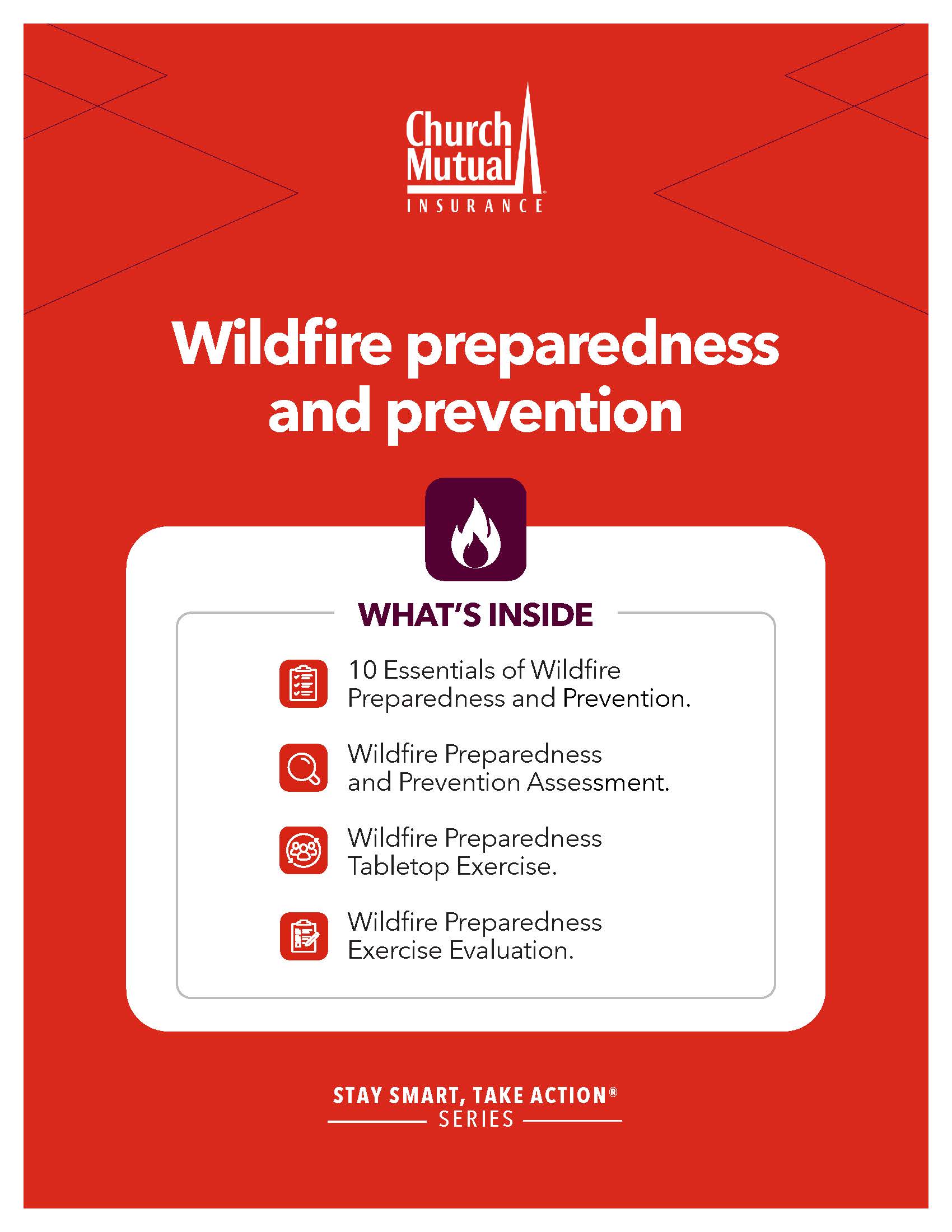
This toolkit includes action‑oriented resources that work together to support planning, prevention and response.
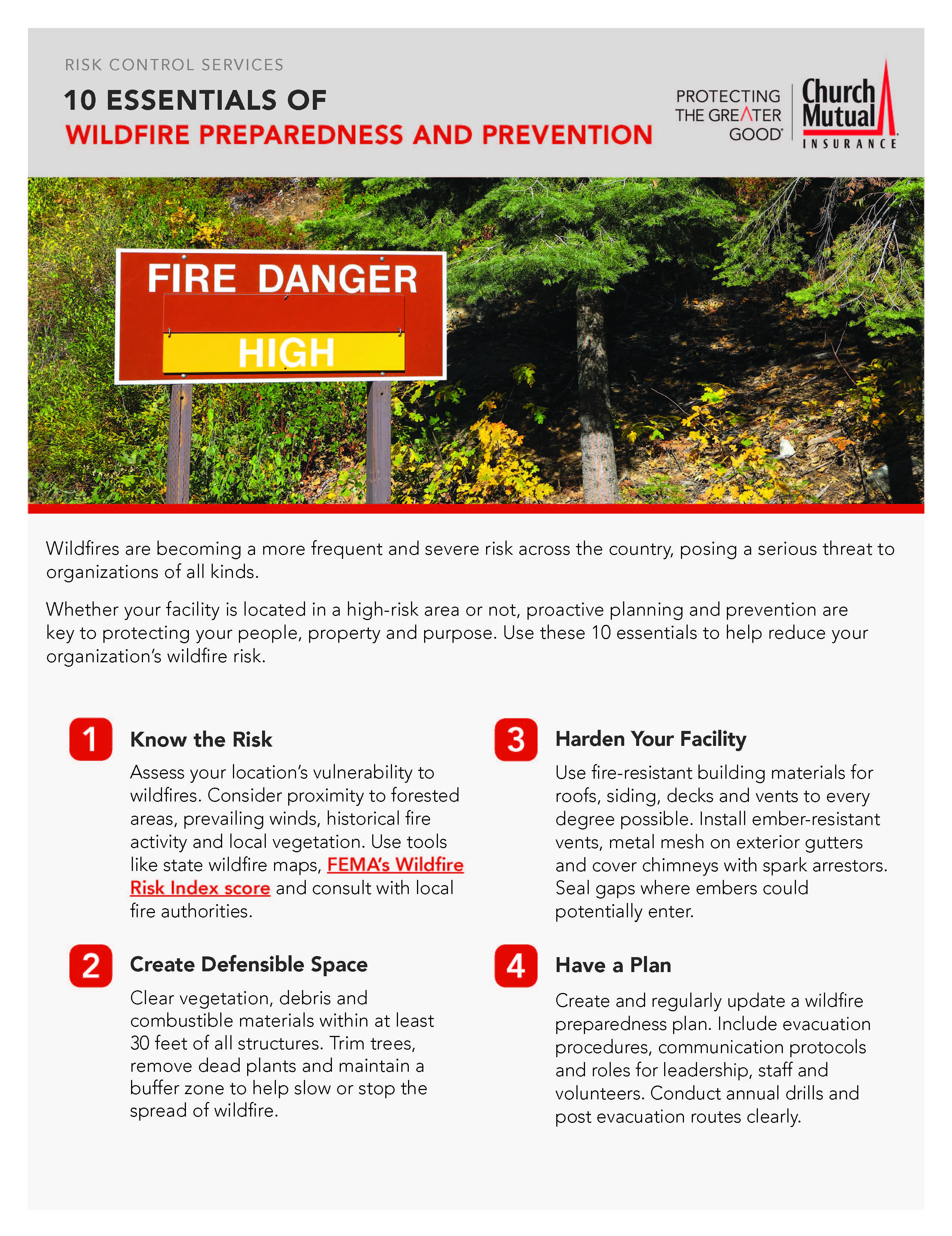
This foundational resource outlines 10 key areas organizations should address to strengthen wildfire preparedness and reduce risk. The essentials provide a clear framework to help organizations:
Together, these essentials offer a practical starting point for building or refining a comprehensive wildfire readiness approach.
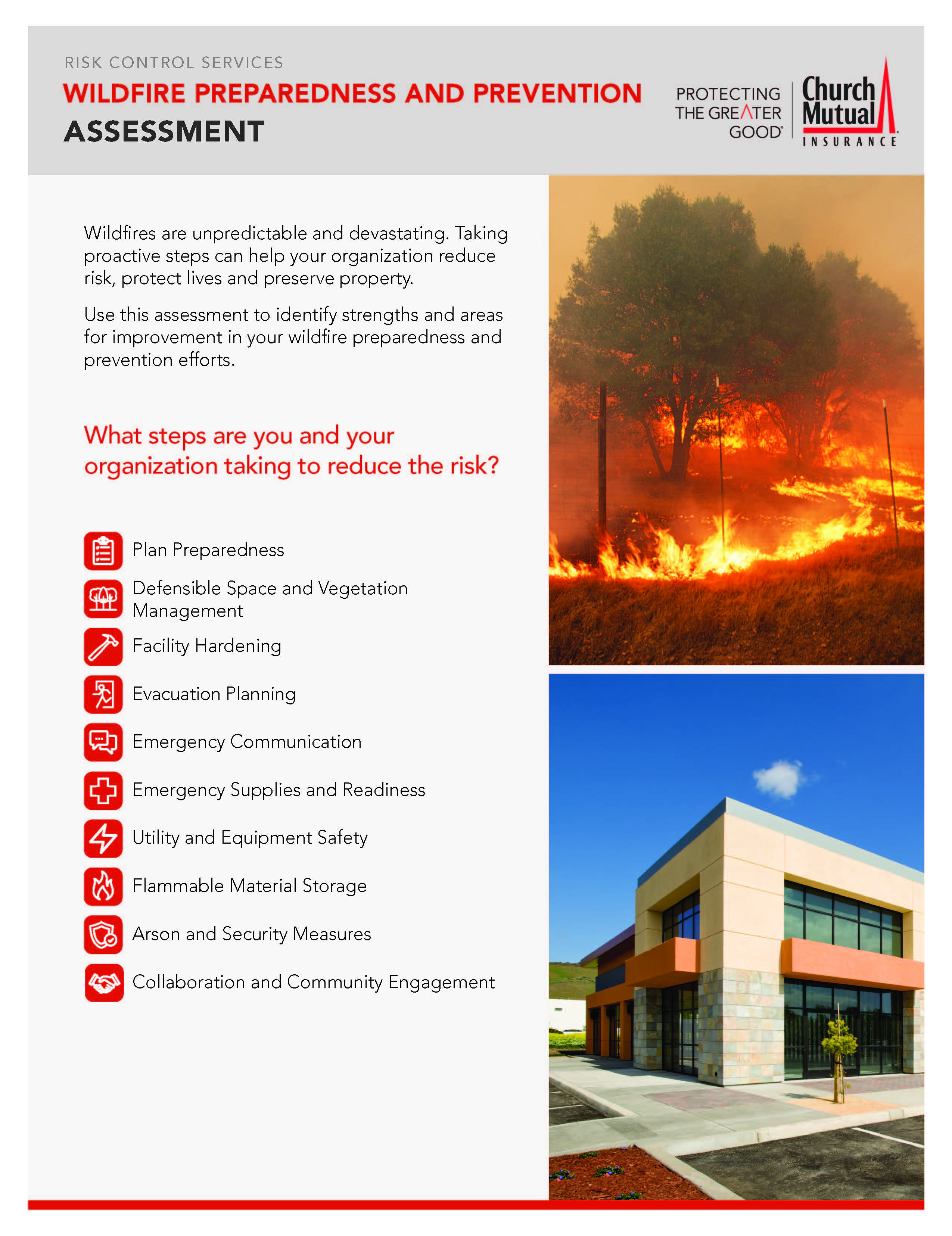
The assessment helps organizations evaluate their current wildfire preparedness and prevention practices. By answering a series of focused questions, organizations can:
The assessment is intended to support reflection and improvement — not judgment — and can be revisited as conditions or facilities change.
The tabletop exercise guides teams through a realistic wildfire scenario in a facilitated, discussion‑based format. It is designed to help organizations:
Tabletop exercises help turn written plans into actionable readiness.
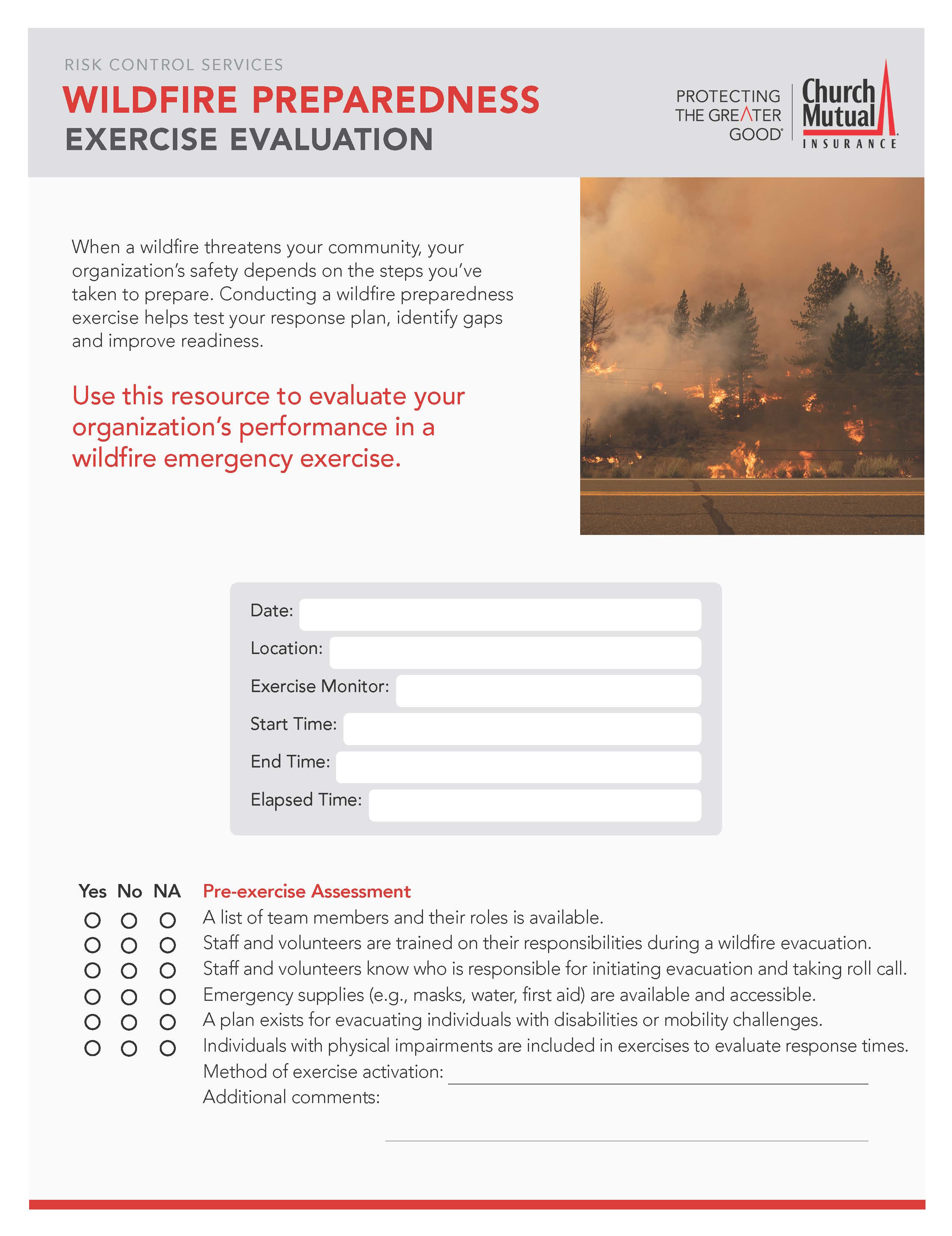
The exercise evaluation tool helps organizations reflect on lessons learned after completing the tabletop exercise. It supports teams in:
Using the evaluation tool helps reinforce preparedness as an ongoing process rather than a one‑time activity.
Organizations may be at different stages of wildfire preparedness. This toolkit can help:
Whether you’re building a wildfire plan from the ground up or refining current practices, the toolkit offers a structured and practical path forward.
No. While especially relevant for organizations in wildfire‑prone regions, this toolkit can also support organizations in areas where wildfire risk may be emerging due to climate or land‑use changes.
No. The toolkit is designed to complement — not replace — emergency plans, safety training and local response coordination.
Plans should be reviewed regularly, especially seasonally, after facility changes, or following a wildfire or near‑miss event.
The Wildfire Readiness Toolkit helps organizations move from awareness to action. By downloading the full toolkit, you can:
Having clear, usable resources can help make wildfire readiness more manageable — and more effective.


Wildfires are becoming more frequent and severe across many regions, placing mission‑driven organizations at increased risk. Preparing for wildfire hazards requires more than reacting when smoke appears — it calls for intentional planning, regular maintenance, staff readiness and clear response procedures.
The Wildfire Readiness Toolkit brings together practical guidance, assessments and interactive planning tools designed to help organizations evaluate their wildfire exposure, identify vulnerabilities and take meaningful steps to strengthen readiness before, during and after a wildfire event.
The Wildfire Readiness Toolkit is designed for mission‑driven organizations that own, operate or manage properties that may be exposed to wildfire risk, including:
Whether your organization is located in a high‑risk wildfire zone or an area where wildfire exposure is emerging, these resources are adaptable to organizations of different sizes, regions and operational needs.
Wildfires can escalate quickly and cause widespread damage — often with little warning. Without proactive planning, organizations may face:
Effective wildfire readiness can help organizations:
Readiness is not a one‑time task — it’s an ongoing process that evolves as conditions, facilities and operations change.
This toolkit includes action‑oriented resources that work together to support planning, prevention and response.
This foundational resource outlines 10 key areas organizations should address to strengthen wildfire preparedness and reduce risk. The essentials provide a clear framework to help organizations:
Together, these essentials offer a practical starting point for building or refining a comprehensive wildfire readiness approach.
The assessment helps organizations evaluate their current wildfire preparedness and prevention practices. By answering a series of focused questions, organizations can:
The assessment is intended to support reflection and improvement — not judgment — and can be revisited as conditions or facilities change.
The tabletop exercise guides teams through a realistic wildfire scenario in a facilitated, discussion‑based format. It is designed to help organizations:
Tabletop exercises help turn written plans into actionable readiness.
The exercise evaluation tool helps organizations reflect on lessons learned after completing the tabletop exercise. It supports teams in:
Using the evaluation tool helps reinforce preparedness as an ongoing process rather than a one‑time activity.
Organizations may be at different stages of wildfire preparedness. This toolkit can help:
Whether you’re building a wildfire plan from the ground up or refining current practices, the toolkit offers a structured and practical path forward.
No. While especially relevant for organizations in wildfire‑prone regions, this toolkit can also support organizations in areas where wildfire risk may be emerging due to climate or land‑use changes.
No. The toolkit is designed to complement — not replace — emergency plans, safety training and local response coordination.
Plans should be reviewed regularly, especially seasonally, after facility changes, or following a wildfire or near‑miss event.
The Wildfire Readiness Toolkit helps organizations move from awareness to action. By downloading the full toolkit, you can:
Having clear, usable resources can help make wildfire readiness more manageable — and more effective.
Wildfires are becoming more frequent and severe across many regions, placing mission‑driven organizations at increased risk. Preparing for wildfire hazards requires more than reacting when smoke appears — it calls for intentional planning, regular maintenance, staff readiness and clear response procedures.
The Wildfire Readiness Toolkit brings together practical guidance, assessments and interactive planning tools designed to help organizations evaluate their wildfire exposure, identify vulnerabilities and take meaningful steps to strengthen readiness before, during and after a wildfire event.
Wildfires are becoming more frequent and severe across many regions, placing mission‑driven organizations at increased risk. Preparing for wildfire hazards requires more than reacting when smoke appears — it calls for intentional planning, regular maintenance, staff readiness and clear response procedures.
The Wildfire Readiness Toolkit brings together practical guidance, assessments and interactive planning tools designed to help organizations evaluate their wildfire exposure, identify vulnerabilities and take meaningful steps to strengthen readiness before, during and after a wildfire event.
The Wildfire Readiness Toolkit is designed for mission‑driven organizations that own, operate or manage properties that may be exposed to wildfire risk, including:
Whether your organization is located in a high‑risk wildfire zone or an area where wildfire exposure is emerging, these resources are adaptable to organizations of different sizes, regions and operational needs.
Wildfires can escalate quickly and cause widespread damage — often with little warning. Without proactive planning, organizations may face:
Effective wildfire readiness can help organizations:
Readiness is not a one‑time task — it’s an ongoing process that evolves as conditions, facilities and operations change.
This toolkit includes action‑oriented resources that work together to support planning, prevention and response.
This foundational resource outlines 10 key areas organizations should address to strengthen wildfire preparedness and reduce risk. The essentials provide a clear framework to help organizations:
Together, these essentials offer a practical starting point for building or refining a comprehensive wildfire readiness approach.
The assessment helps organizations evaluate their current wildfire preparedness and prevention practices. By answering a series of focused questions, organizations can:
The assessment is intended to support reflection and improvement — not judgment — and can be revisited as conditions or facilities change.
The tabletop exercise guides teams through a realistic wildfire scenario in a facilitated, discussion‑based format. It is designed to help organizations:
Tabletop exercises help turn written plans into actionable readiness.
The exercise evaluation tool helps organizations reflect on lessons learned after completing the tabletop exercise. It supports teams in:
Using the evaluation tool helps reinforce preparedness as an ongoing process rather than a one‑time activity.
Organizations may be at different stages of wildfire preparedness. This toolkit can help:
Whether you’re building a wildfire plan from the ground up or refining current practices, the toolkit offers a structured and practical path forward.
No. While especially relevant for organizations in wildfire‑prone regions, this toolkit can also support organizations in areas where wildfire risk may be emerging due to climate or land‑use changes.
No. The toolkit is designed to complement — not replace — emergency plans, safety training and local response coordination.
Plans should be reviewed regularly, especially seasonally, after facility changes, or following a wildfire or near‑miss event.
The Wildfire Readiness Toolkit helps organizations move from awareness to action. By downloading the full toolkit, you can:
Having clear, usable resources can help make wildfire readiness more manageable — and more effective.