Hurricane Isaias:
If you were impacted by the storm, here's
key recovery considerations for the days and weeks ahead
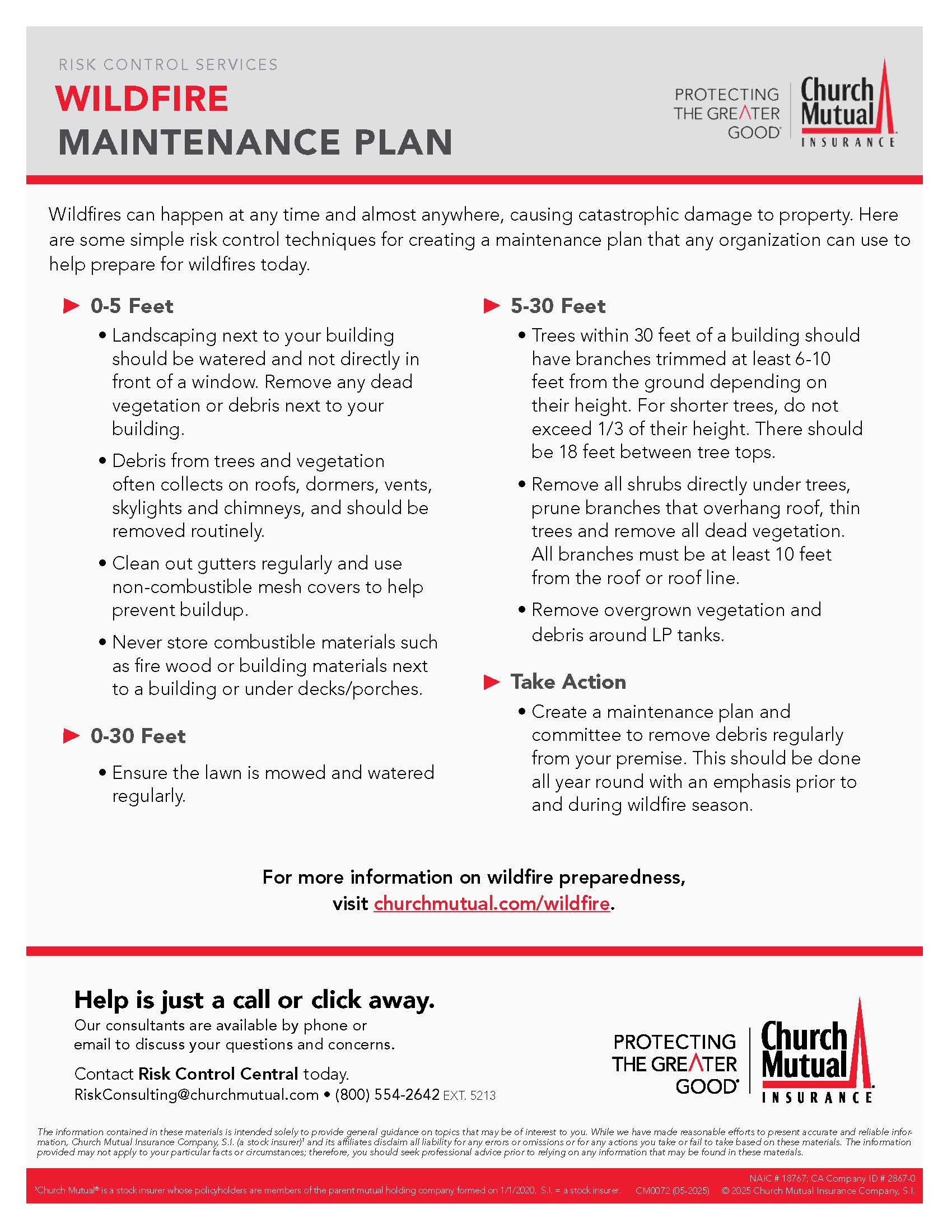
Wildfires can happen anywhere—and they’re becoming more frequent and destructive across the country. Even organizations outside traditional wildfire zones are at risk when high winds, drought and dry vegetation create conditions for fire to spread. While no one can control the weather, you can take practical steps to reduce vulnerabilities and help make your property less susceptible to wildfire-related damage.
Our Wildfire Maintenance Plan offers straightforward guidance for creating defensible space around your facility and establishing year-round upkeep practices. By following these steps, organizations can help lower the risk of wildfire-related damage and proactively protect their people, their property and their mission.
The guide emphasizes maintaining three critical zones around your building to slow or stop fire spread:
These proactive steps create defensible space—essential in slowing flames and giving fire crews a better chance to help protect your facility.
Wildfire risk isn’t seasonal; it requires attention throughout the year. The guide recommends creating a maintenance plan and committee to regularly remove debris, thin vegetation and clear vulnerable areas. Special attention should be given to the months leading up to and during wildfire season, when the threat is highest.
Regular upkeep doesn’t just improve safety—it can also help reduce insurance risks and give your organization some additional peace of mind that you’ve taken meaningful steps to safeguard property and lives.
This preview only touches on a few essentials. The complete Wildfire Maintenance Plan provides a detailed framework for protecting your facility, including step-by-step recommendations, inspection reminders and practical landscaping guidelines. It also highlights how small, consistent actions—like trimming branches, cleaning gutters and storing combustibles safely—can make a big difference when wildfire season arrives.


Learn simple risk control techniques for creating a maintenance plan that any organization can use to help prepare for wildfires today.
Wildfires can happen anywhere—and they’re becoming more frequent and destructive across the country. Even organizations outside traditional wildfire zones are at risk when high winds, drought and dry vegetation create conditions for fire to spread. While no one can control the weather, you can take practical steps to reduce vulnerabilities and help make your property less susceptible to wildfire-related damage.
Our Wildfire Maintenance Plan offers straightforward guidance for creating defensible space around your facility and establishing year-round upkeep practices. By following these steps, organizations can help lower the risk of wildfire-related damage and proactively protect their people, their property and their mission.
The guide emphasizes maintaining three critical zones around your building to slow or stop fire spread:
These proactive steps create defensible space—essential in slowing flames and giving fire crews a better chance to help protect your facility.
Wildfire risk isn’t seasonal; it requires attention throughout the year. The guide recommends creating a maintenance plan and committee to regularly remove debris, thin vegetation and clear vulnerable areas. Special attention should be given to the months leading up to and during wildfire season, when the threat is highest.
Regular upkeep doesn’t just improve safety—it can also help reduce insurance risks and give your organization some additional peace of mind that you’ve taken meaningful steps to safeguard property and lives.
This preview only touches on a few essentials. The complete Wildfire Maintenance Plan provides a detailed framework for protecting your facility, including step-by-step recommendations, inspection reminders and practical landscaping guidelines. It also highlights how small, consistent actions—like trimming branches, cleaning gutters and storing combustibles safely—can make a big difference when wildfire season arrives.
Learn simple risk control techniques for creating a maintenance plan that any organization can use to help prepare for wildfires today.
Learn simple risk control techniques for creating a maintenance plan that any organization can use to help prepare for wildfires today.
Wildfires can happen anywhere—and they’re becoming more frequent and destructive across the country. Even organizations outside traditional wildfire zones are at risk when high winds, drought and dry vegetation create conditions for fire to spread. While no one can control the weather, you can take practical steps to reduce vulnerabilities and help make your property less susceptible to wildfire-related damage.
Our Wildfire Maintenance Plan offers straightforward guidance for creating defensible space around your facility and establishing year-round upkeep practices. By following these steps, organizations can help lower the risk of wildfire-related damage and proactively protect their people, their property and their mission.
The guide emphasizes maintaining three critical zones around your building to slow or stop fire spread:
These proactive steps create defensible space—essential in slowing flames and giving fire crews a better chance to help protect your facility.
Wildfire risk isn’t seasonal; it requires attention throughout the year. The guide recommends creating a maintenance plan and committee to regularly remove debris, thin vegetation and clear vulnerable areas. Special attention should be given to the months leading up to and during wildfire season, when the threat is highest.
Regular upkeep doesn’t just improve safety—it can also help reduce insurance risks and give your organization some additional peace of mind that you’ve taken meaningful steps to safeguard property and lives.
This preview only touches on a few essentials. The complete Wildfire Maintenance Plan provides a detailed framework for protecting your facility, including step-by-step recommendations, inspection reminders and practical landscaping guidelines. It also highlights how small, consistent actions—like trimming branches, cleaning gutters and storing combustibles safely—can make a big difference when wildfire season arrives.



.jpg)