Hurricane Isaias:
If you were impacted by the storm, here's
key recovery considerations for the days and weeks ahead
The Severe Weather Preparedness Toolkit is designed for organizations seeking a structured approach to severe weather readiness, including:
Whether building a preparedness plan from the ground up or refining an existing one, these resources are designed to meet organizations where they are.
Severe weather doesn’t just test buildings; it tests communication, leadership and decision‑making. Organizations that plan ahead are better positioned to help:
Preparedness is an ongoing process. Regularly reviewing plans, updating procedures and practicing responses can help ensure readiness remains effective even as facilities, staffing and risks change.
This collection of resources works together to help organizations assess readiness, strengthen plans and practice response across a range of severe weather scenarios.
A foundational overview of the critical components every organization should have in place before severe weather threatens. This resource covers:
Use this as a starting point or refresher to confirm the basics are in place.
A self‑guided assessment to help organizations evaluate current preparedness efforts and identify potential gaps. It can help organizations:
The assessment is well suited for leadership teams and safety or risk planning committees.
A scenario‑based exercise that walks teams through how they would respond to a tornado impacting their organization. This resource encourages discussion around:
Tabletop exercises can help bridge planning and real‑world application.
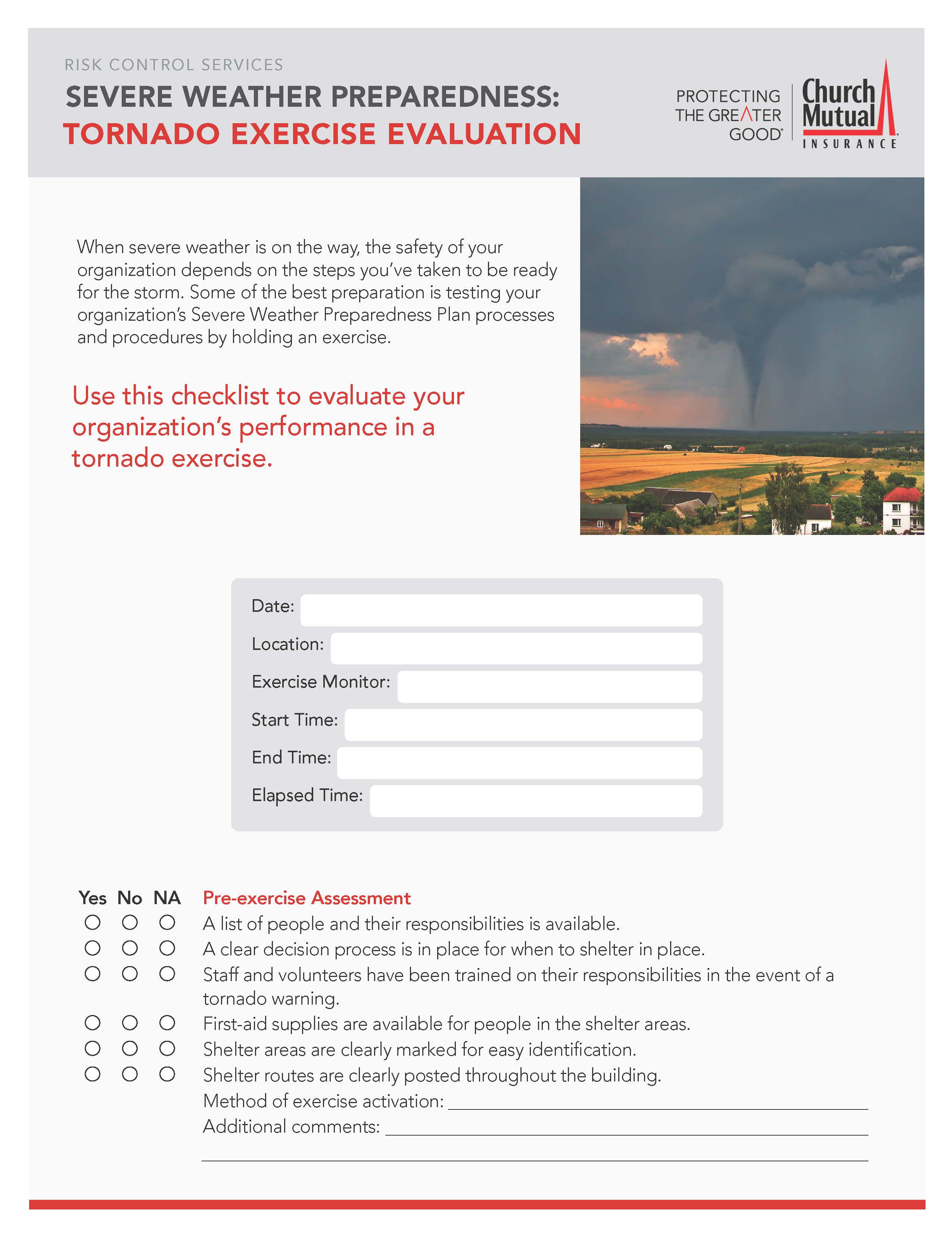
A companion evaluation tool that helps organizations document lessons learned following a tornado tabletop exercise. The exercise evaluation supports organizations in:
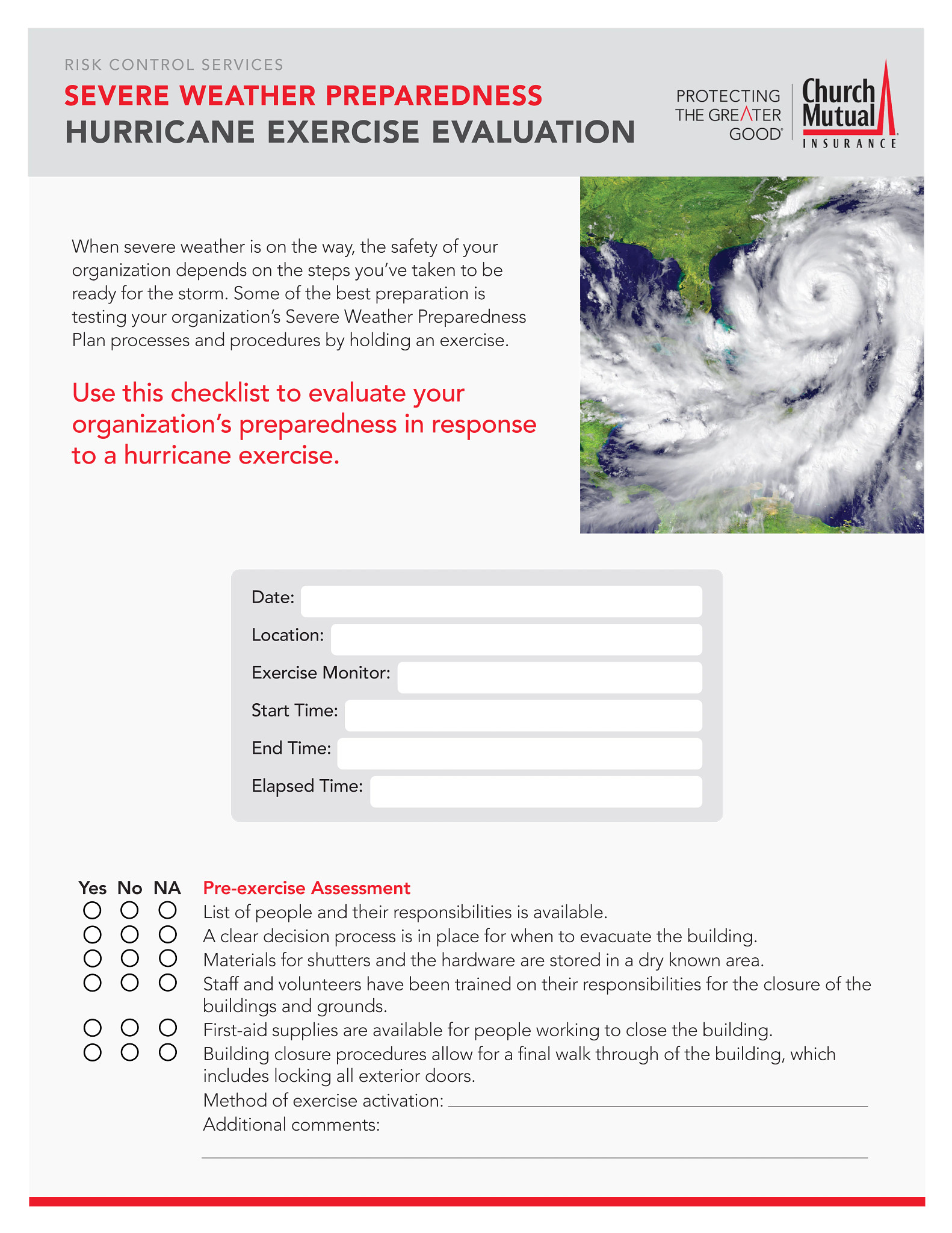
A structured exercise focused on hurricane‑specific challenges, including advance warning, prolonged impacts and recovery considerations. This resource can help organizations plan for:
This evaluation tool is designed to follow the hurricane tabletop exercise and guide future planning improvements. It can help organizations:
An educational resource explaining common wind‑related hazards and how they affect people, buildings and operations. It covers:
Guidance focused on early response actions that can help reduce damage and safety risks. The resource highlights:
An overview of lightning‑related hazards and precautions organizations can take to help protect people and property. Topics within include:
This toolkit is designed to be flexible and practical for organizations at any stage of preparedness. Organizations may choose to:
Resources can be used individually or together and revisited as conditions and organizational needs change.
Any organization responsible for people, facilities and operations can benefit. The toolkit is appropriate for organizations at all levels of preparedness.
No. Resources can be used independently or combined, depending on your organization’s needs and priorities.
Tabletop exercises are discussion‑based scenarios that allow teams to review plans, clarify roles and identify gaps without disrupting operations.
Plans should be reviewed regularly, especially after operational changes or significant weather events. Many organizations review preparedness plans annually or seasonally.
No. This toolkit supports internal planning and preparedness. Organizations should always follow official alerts and guidance from emergency authorities.
Severe weather preparedness is built over time through planning, assessment and practice. This toolkit brings essential resources together to support consistent, proactive readiness.
By downloading the toolkit, organizations can help:
Preparing in advance helps organizations respond more effectively when severe weather strikes.


Severe weather events can disrupt operations, damage facilities and put people at risk, often with little warning. Taking steps to prepare in advance is one of the most effective ways organizations can help protect lives, property and continuity of service.
The Severe Weather Preparedness Toolkit brings together practical guidance, planning tools and scenario‑based exercises to help organizations strengthen readiness and respond more effectively before, during and after severe weather events.
Designed to support proactive planning — not just emergency response — this toolkit can help leaders and staff make informed, timely decisions when conditions change.
The Severe Weather Preparedness Toolkit is designed for organizations seeking a structured approach to severe weather readiness, including:
Whether building a preparedness plan from the ground up or refining an existing one, these resources are designed to meet organizations where they are.
Severe weather doesn’t just test buildings; it tests communication, leadership and decision‑making. Organizations that plan ahead are better positioned to help:
Preparedness is an ongoing process. Regularly reviewing plans, updating procedures and practicing responses can help ensure readiness remains effective even as facilities, staffing and risks change.
This collection of resources works together to help organizations assess readiness, strengthen plans and practice response across a range of severe weather scenarios.
A foundational overview of the critical components every organization should have in place before severe weather threatens. This resource covers:
Use this as a starting point or refresher to confirm the basics are in place.
A self‑guided assessment to help organizations evaluate current preparedness efforts and identify potential gaps. It can help organizations:
The assessment is well suited for leadership teams and safety or risk planning committees.
A scenario‑based exercise that walks teams through how they would respond to a tornado impacting their organization. This resource encourages discussion around:
Tabletop exercises can help bridge planning and real‑world application.
A companion evaluation tool that helps organizations document lessons learned following a tornado tabletop exercise. The exercise evaluation supports organizations in:
A structured exercise focused on hurricane‑specific challenges, including advance warning, prolonged impacts and recovery considerations. This resource can help organizations plan for:
This evaluation tool is designed to follow the hurricane tabletop exercise and guide future planning improvements. It can help organizations:
An educational resource explaining common wind‑related hazards and how they affect people, buildings and operations. It covers:
Guidance focused on early response actions that can help reduce damage and safety risks. The resource highlights:
An overview of lightning‑related hazards and precautions organizations can take to help protect people and property. Topics within include:
This toolkit is designed to be flexible and practical for organizations at any stage of preparedness. Organizations may choose to:
Resources can be used individually or together and revisited as conditions and organizational needs change.
Any organization responsible for people, facilities and operations can benefit. The toolkit is appropriate for organizations at all levels of preparedness.
No. Resources can be used independently or combined, depending on your organization’s needs and priorities.
Tabletop exercises are discussion‑based scenarios that allow teams to review plans, clarify roles and identify gaps without disrupting operations.
Plans should be reviewed regularly, especially after operational changes or significant weather events. Many organizations review preparedness plans annually or seasonally.
No. This toolkit supports internal planning and preparedness. Organizations should always follow official alerts and guidance from emergency authorities.
Severe weather preparedness is built over time through planning, assessment and practice. This toolkit brings essential resources together to support consistent, proactive readiness.
By downloading the toolkit, organizations can help:
Preparing in advance helps organizations respond more effectively when severe weather strikes.
Severe weather events can disrupt operations, damage facilities and put people at risk, often with little warning. Taking steps to prepare in advance is one of the most effective ways organizations can help protect lives, property and continuity of service.
The Severe Weather Preparedness Toolkit brings together practical guidance, planning tools and scenario‑based exercises to help organizations strengthen readiness and respond more effectively before, during and after severe weather events.
Designed to support proactive planning — not just emergency response — this toolkit can help leaders and staff make informed, timely decisions when conditions change.
Severe weather events can disrupt operations, damage facilities and put people at risk, often with little warning. Taking steps to prepare in advance is one of the most effective ways organizations can help protect lives, property and continuity of service.
The Severe Weather Preparedness Toolkit brings together practical guidance, planning tools and scenario‑based exercises to help organizations strengthen readiness and respond more effectively before, during and after severe weather events.
Designed to support proactive planning — not just emergency response — this toolkit can help leaders and staff make informed, timely decisions when conditions change.
The Severe Weather Preparedness Toolkit is designed for organizations seeking a structured approach to severe weather readiness, including:
Whether building a preparedness plan from the ground up or refining an existing one, these resources are designed to meet organizations where they are.
Severe weather doesn’t just test buildings; it tests communication, leadership and decision‑making. Organizations that plan ahead are better positioned to help:
Preparedness is an ongoing process. Regularly reviewing plans, updating procedures and practicing responses can help ensure readiness remains effective even as facilities, staffing and risks change.
This collection of resources works together to help organizations assess readiness, strengthen plans and practice response across a range of severe weather scenarios.
A foundational overview of the critical components every organization should have in place before severe weather threatens. This resource covers:
Use this as a starting point or refresher to confirm the basics are in place.
A self‑guided assessment to help organizations evaluate current preparedness efforts and identify potential gaps. It can help organizations:
The assessment is well suited for leadership teams and safety or risk planning committees.
A scenario‑based exercise that walks teams through how they would respond to a tornado impacting their organization. This resource encourages discussion around:
Tabletop exercises can help bridge planning and real‑world application.
A companion evaluation tool that helps organizations document lessons learned following a tornado tabletop exercise. The exercise evaluation supports organizations in:
A structured exercise focused on hurricane‑specific challenges, including advance warning, prolonged impacts and recovery considerations. This resource can help organizations plan for:
This evaluation tool is designed to follow the hurricane tabletop exercise and guide future planning improvements. It can help organizations:
An educational resource explaining common wind‑related hazards and how they affect people, buildings and operations. It covers:
Guidance focused on early response actions that can help reduce damage and safety risks. The resource highlights:
An overview of lightning‑related hazards and precautions organizations can take to help protect people and property. Topics within include:
This toolkit is designed to be flexible and practical for organizations at any stage of preparedness. Organizations may choose to:
Resources can be used individually or together and revisited as conditions and organizational needs change.
Any organization responsible for people, facilities and operations can benefit. The toolkit is appropriate for organizations at all levels of preparedness.
No. Resources can be used independently or combined, depending on your organization’s needs and priorities.
Tabletop exercises are discussion‑based scenarios that allow teams to review plans, clarify roles and identify gaps without disrupting operations.
Plans should be reviewed regularly, especially after operational changes or significant weather events. Many organizations review preparedness plans annually or seasonally.
No. This toolkit supports internal planning and preparedness. Organizations should always follow official alerts and guidance from emergency authorities.
Severe weather preparedness is built over time through planning, assessment and practice. This toolkit brings essential resources together to support consistent, proactive readiness.
By downloading the toolkit, organizations can help:
Preparing in advance helps organizations respond more effectively when severe weather strikes.