Hurricane Isaias:
If you were impacted by the storm, here's
key recovery considerations for the days and weeks ahead
Church Mutual Insurance
Insurance
By Industry
Houses of WorshipNonprofit & Human Services OrganizationsCamps, Sports & Outdoor RecreationEducation & Schools
By Coverage
Specialized CoverageProperty CoverageLiability CoverageWorkers’ Compensation
Resources
Risk Control
View AllChecklists & GuidesSafety ProductsVideos
Articles
View AllCamps, Sports, and Outdoor RecreationEducation and SchoolsHouses of WorshipNonprofit and Human Services
Partner Services
View AllNurse HotlineTelemedicineBackground Checks
Additional Resources
Customer CenterBroker CenterFAQs
Support
Get In Touch
ChatContact Options800-554-2642
Additional Support
Claims CenterPremium AuditPayment CenterFind Your Local RepBroker Center
About
Who We Are
Why Church MutualHistoryLeadershipTestimonialsCM CARES®Newsroom
Careers
Job OpeningsWorking HereCareer AreasDiversity & InclusionBenefitsEarly Career
pay a bill
Pay online:
Make A Payment
Visit our Payment Center for more info. We’ve upgraded our payment system. Read our FAQs for details.
File a Claim
Start Your Claim
Questions? Visit our Claims Center for more info.
Log In
Customer Accounts:
Customer Log In
CREATE ACCOUNT
Broker Accounts:
BROKER LOG IN
CREATE ACCOUNT
search
I’m looking for…
Questions? Check out our FAQs for more info.
Start a Quote
My organization is a
Thank you! Your submission has been received!
Oops! Something went wrong while submitting the form.
Start a Quote
US flagChurch Mutual gives backUS flag
Checklists & Guides
Education & Schools
Nonprofit & Human Services Organizations
Houses of Worship
Camps Sports & Outdoor Recreation
Fire Preparedness & Prevention
Checklists & Guides
Education & Schools
Nonprofit & Human Services Organizations
Houses of Worship
Camps Sports & Outdoor Recreation
Fire Preparedness & Prevention
1/8/2021
Information

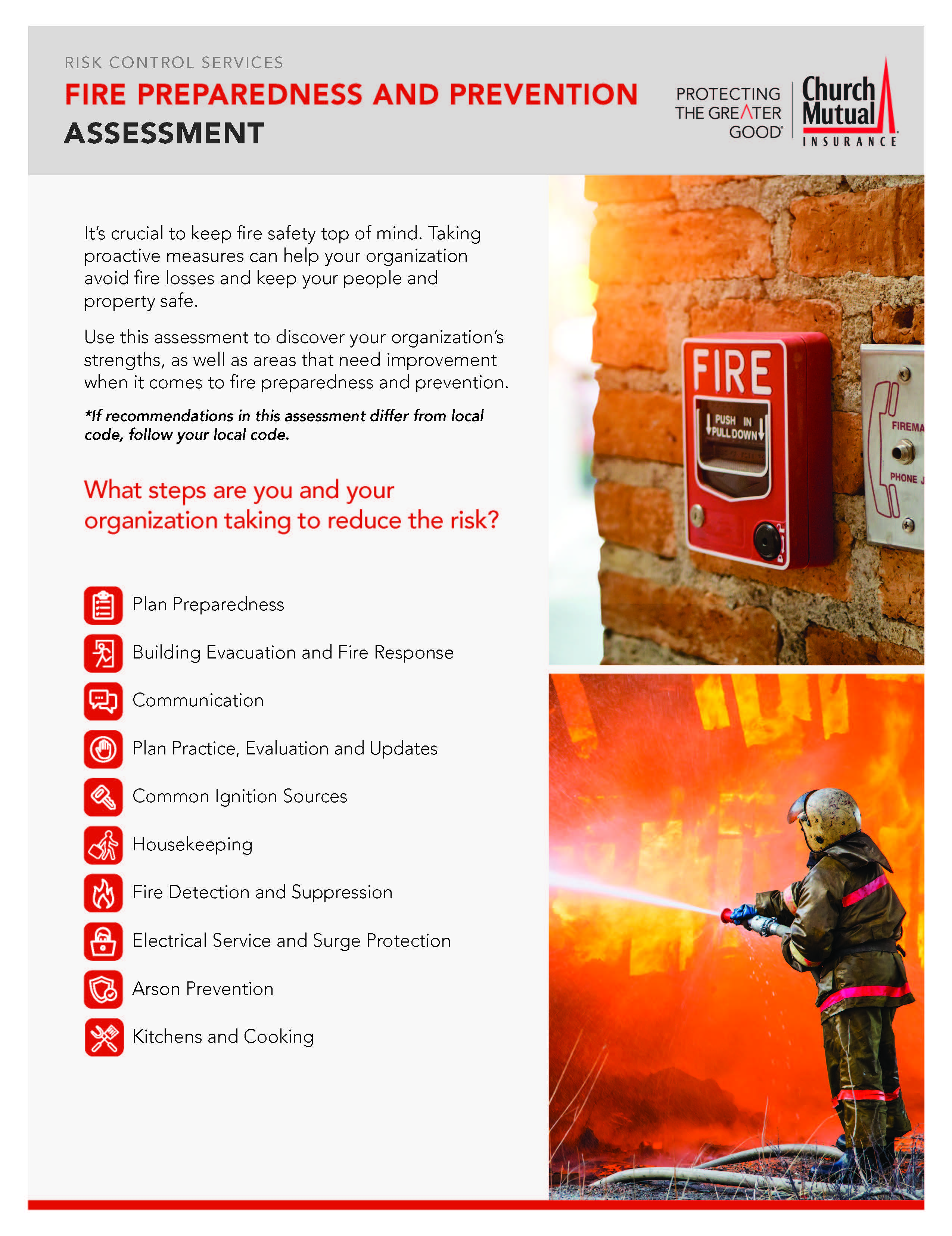
Fire Preparedness and Prevention Assessment

Fire Preparedness and Prevention Assessment

Fires are among the most devastating risks organizations face. In just minutes, they can threaten lives, damage property and interrupt vital operations. While many organizations have smoke detectors and extinguishers on hand, true fire preparedness requires a comprehensive approach that includes planning, prevention, training and regular evaluation.

Our Fire Preparedness and Prevention Assessment is a structured tool that helps organizations identify strengths, uncover vulnerabilities and prioritize improvements. By completing this assessment, leaders can move beyond guesswork and measure how well their organization is positioned to prevent and respond to fire emergencies.

Why Use a Fire Preparedness and Prevention Assessment?

Even a strong plan on paper doesn’t guarantee a successful response in practice. This assessment provides a framework for evaluating key elements of fire readiness across your entire facility. Each item is rated as “done consistently,” “needs improvement” or “not done,” giving you a clear picture of where you stand and what actions to take next.

Key Areas of Evaluation

The assessment organizes preparedness elements into several categories:

  • Plan preparedness. Do you have a written fire prevention and preparedness plan? Has it been reviewed by local authorities? Are staff roles clearly defined, and is ongoing training provided?
  • Building evacuation and fire response. Does your facility have a detailed evacuation plan with posted routes, assembly areas and procedures for assisting individuals with disabilities? Are exits marked, lit and unobstructed?
  • Communication. Are there clear instructions for dialing 911, an up-to-date contact list and tools like radios or PA systems for notifying occupants?
  • Plan practice and updates. Are drills conducted annually? Is the plan updated after each exercise or when facility changes occur?

Addressing Common Risks

Beyond planning, the assessment examines practical safety measures, including:

  • Ignition sources. Are space heaters, candles and hot plates restricted? Are extension cords properly used and disposed of if damaged?
  • Housekeeping. Are combustible materials stored away from furnace rooms and structures? Are gas-powered tools and fuels stored safely?
  • Fire detection and suppression. Are smoke detectors tested monthly? Are extinguishers inspected annually and matched to the type of hazard?
  • Electrical safety. Are breakers properly labeled and covered? Is older wiring inspected by licensed electricians?
  • Arson prevention. Do you maintain good exterior lighting, trim landscaping near entry points and secure ladders and doors when buildings are unattended?
  • Kitchens and cooking. Are K-class extinguishers in place, hoods inspected annually and appliances regularly maintained?

Scoring Your Readiness

At the end of the assessment, organizations can tally their results:

  • 64 or more items “done consistently” = well prepared.
  • 57–63 items = some elements in place, but improvement needed.
  • 56 or fewer items = significant gaps requiring urgent action.

This scoring system makes it easy to benchmark progress and ensure ongoing improvements.

Why Download the Full Fire Preparedness and Prevention Assessment?

This summary highlights only some of the categories and scoring methods. The complete Fire Preparedness and Prevention Assessment provides the full checklist, detailed criteria and a clear framework for measuring and improving fire safety. With this tool, you can take a proactive stance to help protect your people, property and mission.

Share this article with others:
FacebookLinkedinMailLink
URL copied to clipboard!
Explore more risk resources:
By Category
ArticlesChecklists &GuidesSafety ProductsVideos
By Organization
Camps, Sports & Outdoor RecreationEducation & SchoolsHouses of WorshipNonprofit & Human Service Organizations
By Topic
Buildings & GroundsBusiness PlanningCOVID-19 Response & RecoveryCybersecurityFinancial TipsFire Preparedness & PreventionInjury & Illness PreventionMaintenanceSecurity & Crime PreventionSevere Weather PreparednessSexual Abuse PreventionStaff & Volunteer Safety & ManagementTransportation SafetyTravel

Related Risk Management Articles

view all articles
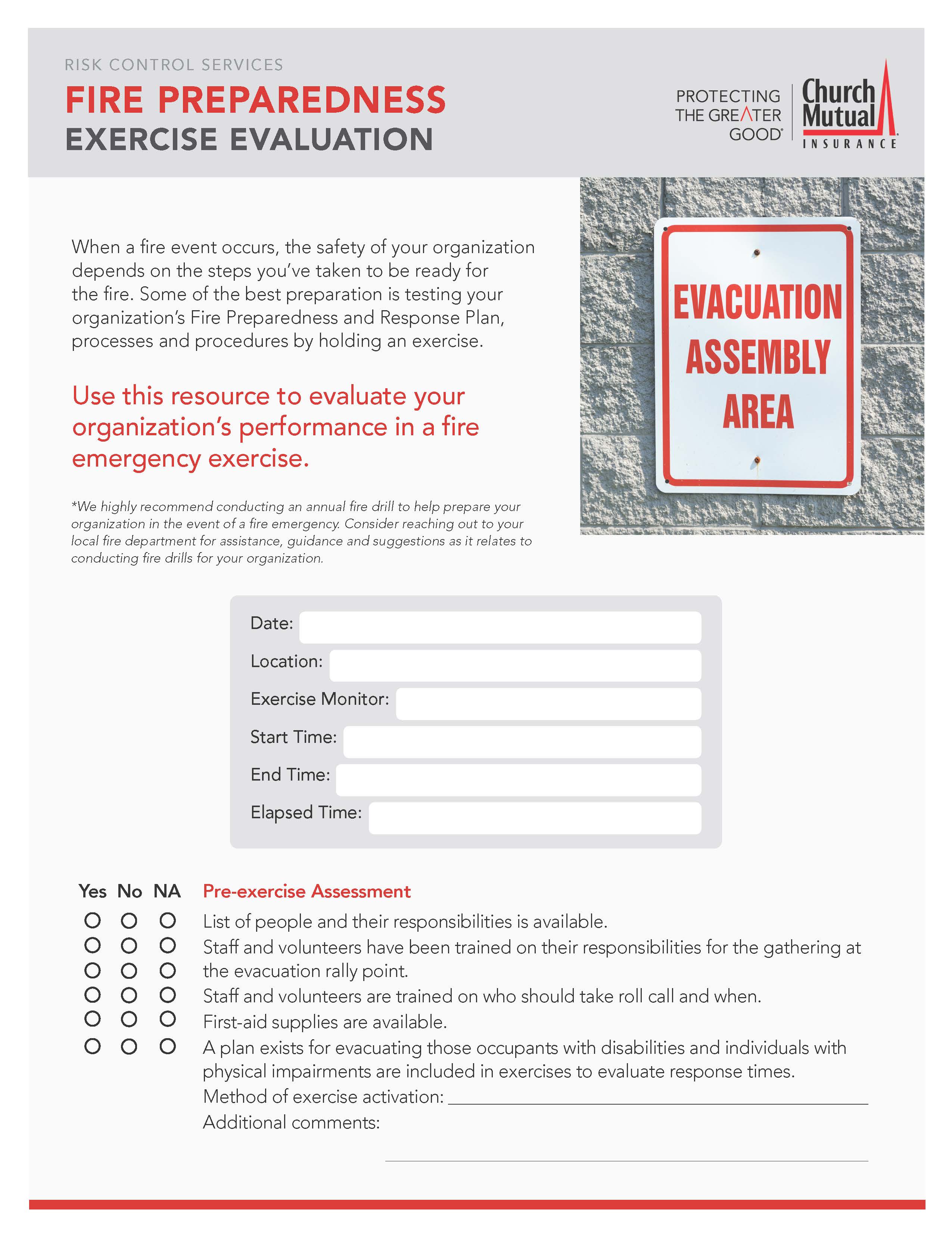
Fire Preparedness Exercise EvaluationFire Preparedness Exercise Evaluation

Fire Preparedness Exercise Evaluation

read the article
Arrow
10 Essentials of Fire Preparedness and Prevention10 Essentials of Fire Preparedness and Prevention

10 Essentials of Fire Preparedness and Prevention

read the article
Arrow
Wildfire Readiness ToolkitWildfire Readiness Toolkit

Wildfire Readiness Toolkit

read the article
Arrow
Checklists & Guides
Education & Schools
Nonprofit & Human Services Organizations
Houses of Worship
Camps Sports & Outdoor Recreation
Fire Preparedness & Prevention

Fire Preparedness and Prevention Assessment

What steps are you taking to reduce risk? Use this assessment to determine areas of improvement when it comes to fire preparedness and prevention.

Fires are among the most devastating risks organizations face. In just minutes, they can threaten lives, damage property and interrupt vital operations. While many organizations have smoke detectors and extinguishers on hand, true fire preparedness requires a comprehensive approach that includes planning, prevention, training and regular evaluation.

Our Fire Preparedness and Prevention Assessment is a structured tool that helps organizations identify strengths, uncover vulnerabilities and prioritize improvements. By completing this assessment, leaders can move beyond guesswork and measure how well their organization is positioned to prevent and respond to fire emergencies.

Why Use a Fire Preparedness and Prevention Assessment?

Even a strong plan on paper doesn’t guarantee a successful response in practice. This assessment provides a framework for evaluating key elements of fire readiness across your entire facility. Each item is rated as “done consistently,” “needs improvement” or “not done,” giving you a clear picture of where you stand and what actions to take next.

Key Areas of Evaluation

The assessment organizes preparedness elements into several categories:

  • Plan preparedness. Do you have a written fire prevention and preparedness plan? Has it been reviewed by local authorities? Are staff roles clearly defined, and is ongoing training provided?
  • Building evacuation and fire response. Does your facility have a detailed evacuation plan with posted routes, assembly areas and procedures for assisting individuals with disabilities? Are exits marked, lit and unobstructed?
  • Communication. Are there clear instructions for dialing 911, an up-to-date contact list and tools like radios or PA systems for notifying occupants?
  • Plan practice and updates. Are drills conducted annually? Is the plan updated after each exercise or when facility changes occur?

Addressing Common Risks

Beyond planning, the assessment examines practical safety measures, including:

  • Ignition sources. Are space heaters, candles and hot plates restricted? Are extension cords properly used and disposed of if damaged?
  • Housekeeping. Are combustible materials stored away from furnace rooms and structures? Are gas-powered tools and fuels stored safely?
  • Fire detection and suppression. Are smoke detectors tested monthly? Are extinguishers inspected annually and matched to the type of hazard?
  • Electrical safety. Are breakers properly labeled and covered? Is older wiring inspected by licensed electricians?
  • Arson prevention. Do you maintain good exterior lighting, trim landscaping near entry points and secure ladders and doors when buildings are unattended?
  • Kitchens and cooking. Are K-class extinguishers in place, hoods inspected annually and appliances regularly maintained?

Scoring Your Readiness

At the end of the assessment, organizations can tally their results:

  • 64 or more items “done consistently” = well prepared.
  • 57–63 items = some elements in place, but improvement needed.
  • 56 or fewer items = significant gaps requiring urgent action.

This scoring system makes it easy to benchmark progress and ensure ongoing improvements.

Why Download the Full Fire Preparedness and Prevention Assessment?

This summary highlights only some of the categories and scoring methods. The complete Fire Preparedness and Prevention Assessment provides the full checklist, detailed criteria and a clear framework for measuring and improving fire safety. With this tool, you can take a proactive stance to help protect your people, property and mission.

Related Risk Management Videos

view all videos
Fire Preparedness & PreventionFire Preparedness & Prevention

Fire Preparedness & Prevention

Watch the Video
Arrow
Checklists & Guides
Information
Safety Products are NO COST for Church Mutual customers.

Fire Preparedness and Prevention Assessment

What steps are you taking to reduce risk? Use this assessment to determine areas of improvement when it comes to fire preparedness and prevention.

first-time enrollment
order additional devices
Order In Portal
Fire Preparedness and Prevention Assessment

Related Risk Management Safety Products

view all safety products
CM Wildfire Solutions™CM Wildfire Solutions™

CM Wildfire Solutions™

Learn More & Order
Arrow
Checklists & Guides
Education & Schools
Nonprofit & Human Services Organizations
Houses of Worship
Camps Sports & Outdoor Recreation
Fire Preparedness & Prevention

Fire Preparedness and Prevention Assessment

What steps are you taking to reduce risk? Use this assessment to determine areas of improvement when it comes to fire preparedness and prevention.

download now
open in a new tab
Fire Preparedness and Prevention Assessment

Fires are among the most devastating risks organizations face. In just minutes, they can threaten lives, damage property and interrupt vital operations. While many organizations have smoke detectors and extinguishers on hand, true fire preparedness requires a comprehensive approach that includes planning, prevention, training and regular evaluation.

Our Fire Preparedness and Prevention Assessment is a structured tool that helps organizations identify strengths, uncover vulnerabilities and prioritize improvements. By completing this assessment, leaders can move beyond guesswork and measure how well their organization is positioned to prevent and respond to fire emergencies.

Why Use a Fire Preparedness and Prevention Assessment?

Even a strong plan on paper doesn’t guarantee a successful response in practice. This assessment provides a framework for evaluating key elements of fire readiness across your entire facility. Each item is rated as “done consistently,” “needs improvement” or “not done,” giving you a clear picture of where you stand and what actions to take next.

Key Areas of Evaluation

The assessment organizes preparedness elements into several categories:

  • Plan preparedness. Do you have a written fire prevention and preparedness plan? Has it been reviewed by local authorities? Are staff roles clearly defined, and is ongoing training provided?
  • Building evacuation and fire response. Does your facility have a detailed evacuation plan with posted routes, assembly areas and procedures for assisting individuals with disabilities? Are exits marked, lit and unobstructed?
  • Communication. Are there clear instructions for dialing 911, an up-to-date contact list and tools like radios or PA systems for notifying occupants?
  • Plan practice and updates. Are drills conducted annually? Is the plan updated after each exercise or when facility changes occur?

Addressing Common Risks

Beyond planning, the assessment examines practical safety measures, including:

  • Ignition sources. Are space heaters, candles and hot plates restricted? Are extension cords properly used and disposed of if damaged?
  • Housekeeping. Are combustible materials stored away from furnace rooms and structures? Are gas-powered tools and fuels stored safely?
  • Fire detection and suppression. Are smoke detectors tested monthly? Are extinguishers inspected annually and matched to the type of hazard?
  • Electrical safety. Are breakers properly labeled and covered? Is older wiring inspected by licensed electricians?
  • Arson prevention. Do you maintain good exterior lighting, trim landscaping near entry points and secure ladders and doors when buildings are unattended?
  • Kitchens and cooking. Are K-class extinguishers in place, hoods inspected annually and appliances regularly maintained?

Scoring Your Readiness

At the end of the assessment, organizations can tally their results:

  • 64 or more items “done consistently” = well prepared.
  • 57–63 items = some elements in place, but improvement needed.
  • 56 or fewer items = significant gaps requiring urgent action.

This scoring system makes it easy to benchmark progress and ensure ongoing improvements.

Why Download the Full Fire Preparedness and Prevention Assessment?

This summary highlights only some of the categories and scoring methods. The complete Fire Preparedness and Prevention Assessment provides the full checklist, detailed criteria and a clear framework for measuring and improving fire safety. With this tool, you can take a proactive stance to help protect your people, property and mission.

download now
open in a new tab

Related Risk Management Checklists & Guides

view all checklists & guides
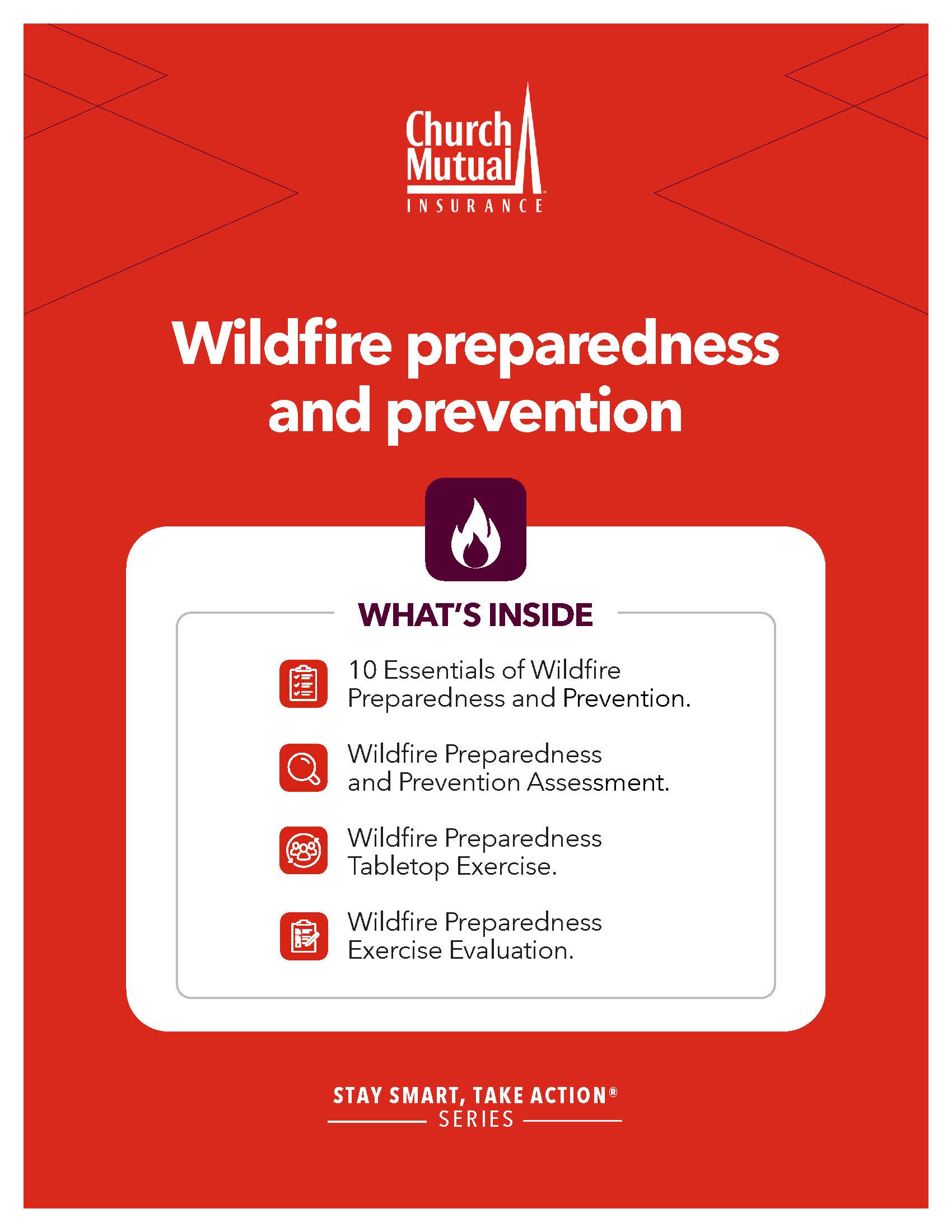
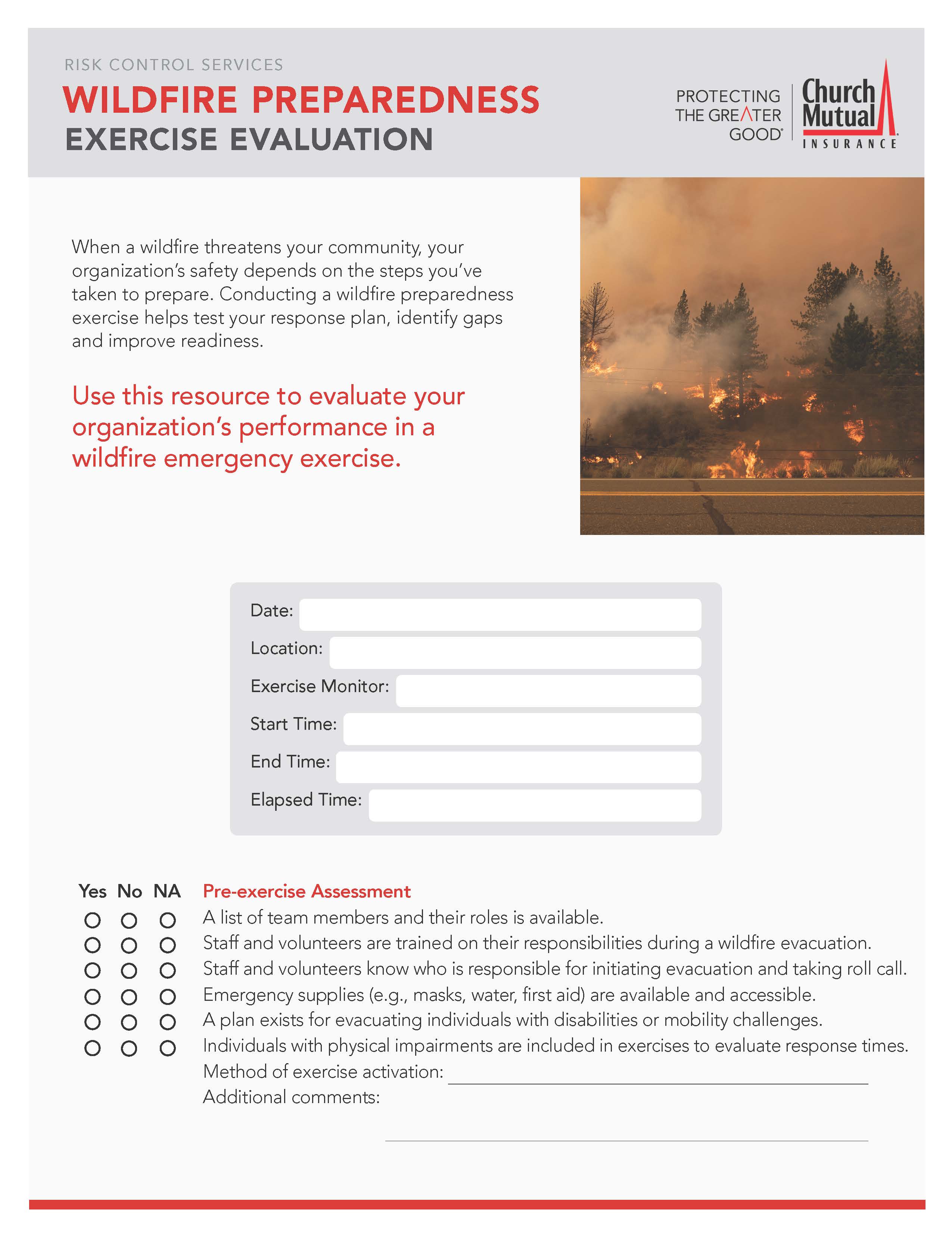
Wildfire Preparedness Exercise EvaluationFire Preparedness and Prevention Assessment

Wildfire Preparedness Exercise Evaluation

Get the Guide
Arrow
Fire Preparedness Exercise EvaluationFire Preparedness and Prevention Assessment

Fire Preparedness Exercise Evaluation

Get the Guide
Arrow
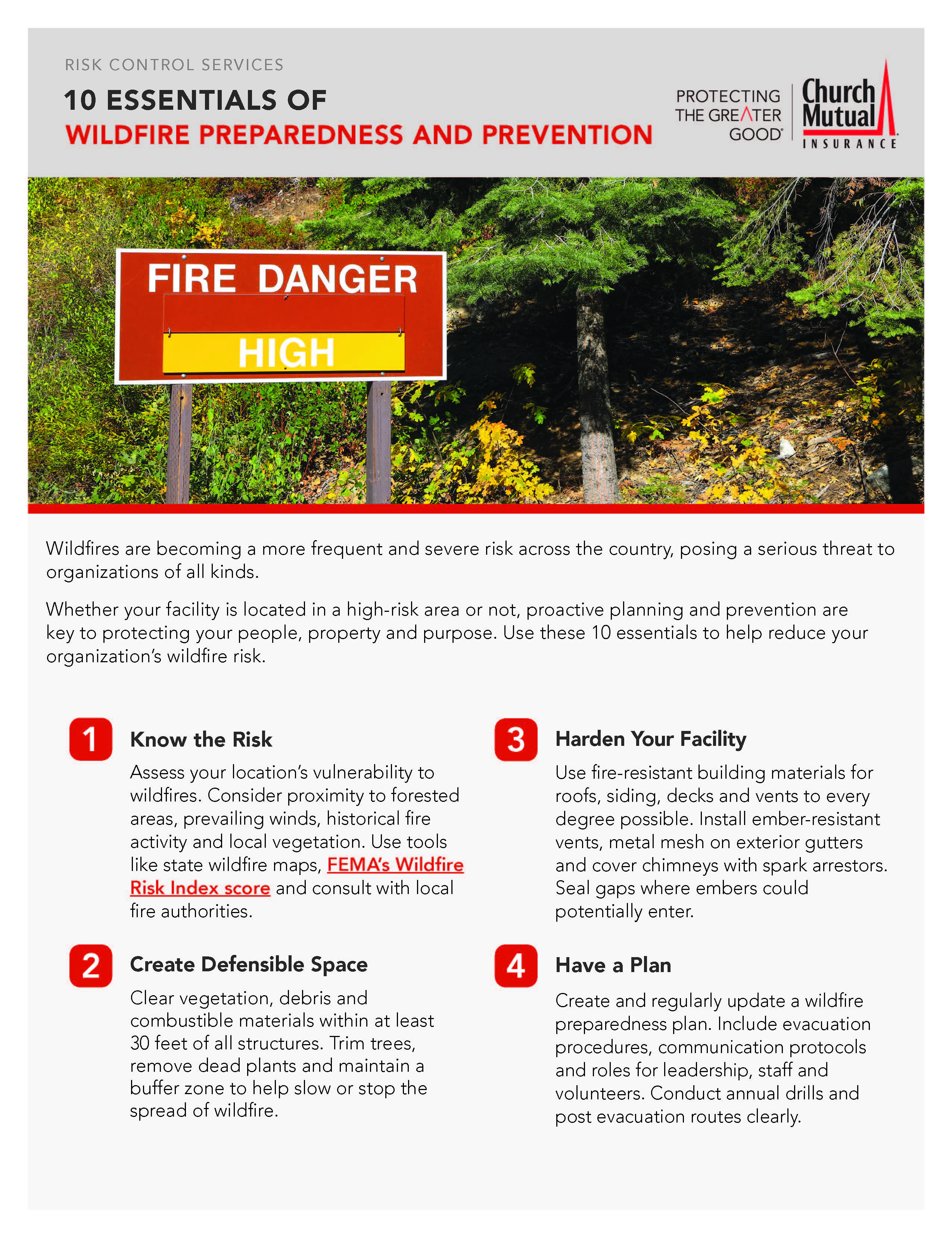
10 Essentials of Wildfire Preparedness and PreventionFire Preparedness and Prevention Assessment

10 Essentials of Wildfire Preparedness and Prevention

Get the Guide
Arrow
Church Mutual Insurance
Facebook
LinkedIn
Youtube
Instagram
800-554-2642
Quick Links
Request a QuotePay a BillFile a ClaimFind Your Local Rep
Get Answers
Contact UsClaims CenterPayment CenterCustomer CenterBroker CenterNewsroom
Careers
Job OpeningsWorking HereCareer AreasDiversity & InclusionBenefitsEarly Career
Site Map
|
Consent Preferences
|
Legal & Privacy Policy

Church Mutual Insurance Company, S.I. (a stock insurer) | P.O. Box 357 | 3000 Schuster Lane | Merrill, WI 54452-0357 | Telephone (800) 554-2642 or (715) 536-5577
© 2026 Church Mutual Insurance Company, S.I. All rights reserved. Protecting the Greater Good is a registered trademark of Church Mutual Insurance Company, S.I.

¹ Church Mutual is a stock insurer whose policyholders are members of the parent mutual holding company formed on 1/1/20. S.I. = a stock insurer.