Hurricane Isaias:
If you were impacted by the storm, here's
key recovery considerations for the days and weeks ahead

This toolkit is designed for mission-driven organizations seeking to improve readiness for violent incidents, including:
Whether you’re just starting or already have safety protocols in place, this toolkit offers resources to build or strengthen plans tailored to your people and facilities.
Violent incidents can occur with little warning and escalate rapidly. Without planning and clarity, organizations may experience:
Proactive preparedness helps organizations:
Preparation is an ongoing commitment — not a one-time task.
The Active Threat Preparedness Toolkit brings together guidance, planning tools and evaluation resources designed to help organizations prepare for, respond to and learn from armed intruder scenarios. Each resource supports a different stage of preparedness and works together as part of an ongoing readiness approach.
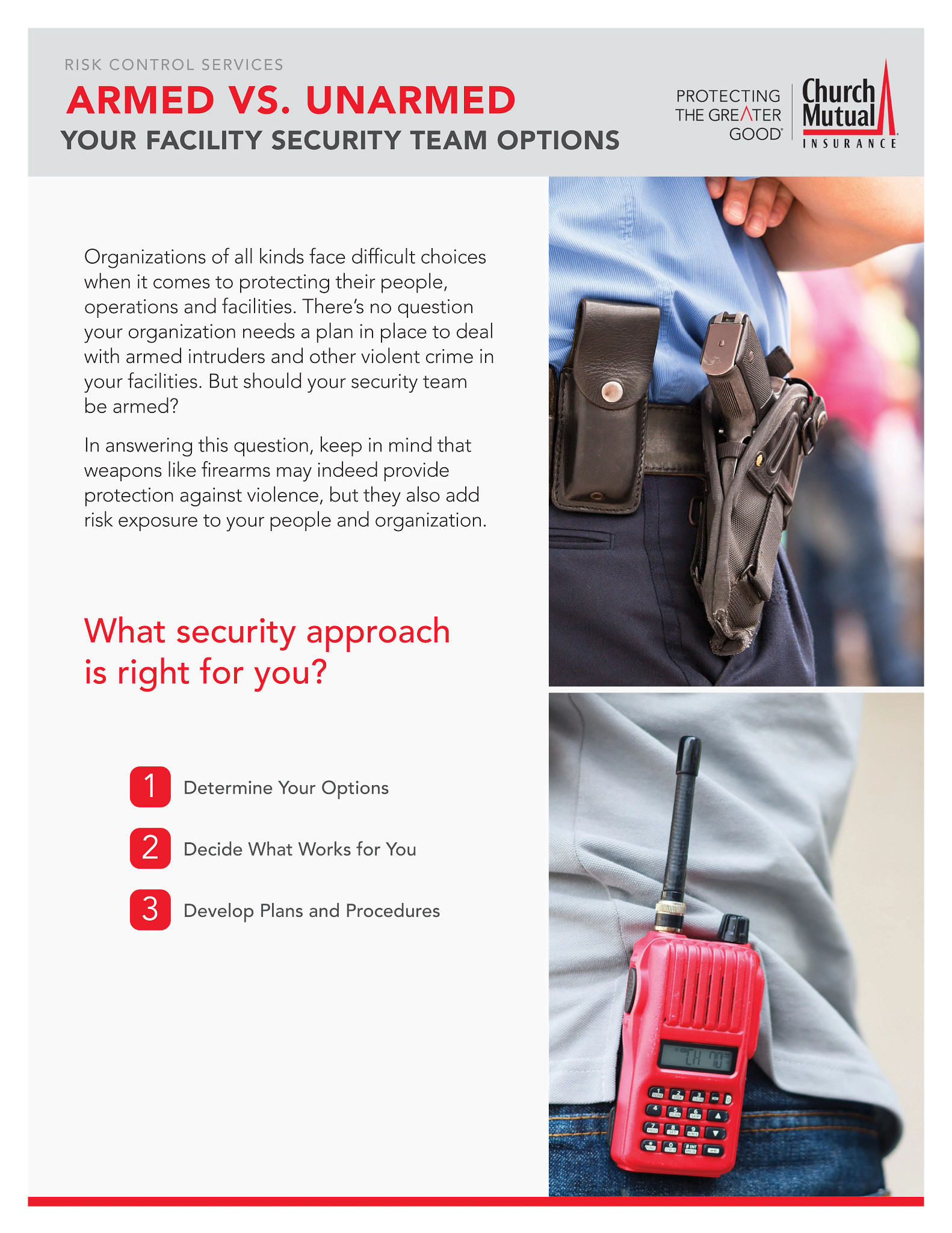
This resource helps organizations evaluate different facility security team approaches based on their size, mission, culture and risk profile. It provides guidance to help leaders:
The goal is not to prescribe a single solution, but to support thoughtful, informed planning.
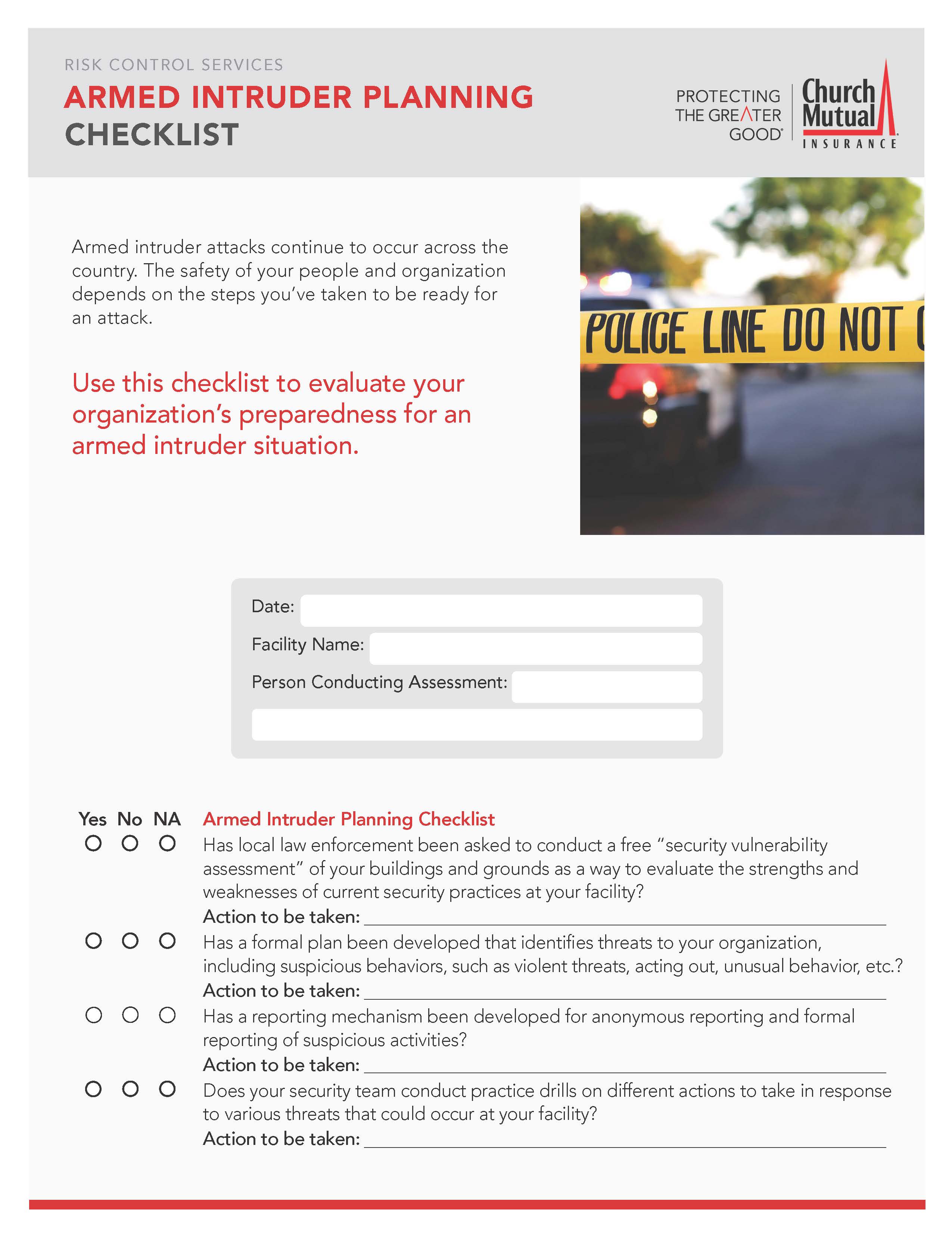
The planning checklist helps organizations assess the foundational elements of armed intruder preparedness. It supports teams in reviewing and strengthening:
The checklist offers a structured way to identify gaps and prioritize next steps.
The tabletop drill walks leadership and staff through a realistic armed intruder scenario in a discussion‑based setting. It helps organizations:
Tabletop drills help turn written plans into actionable readiness.
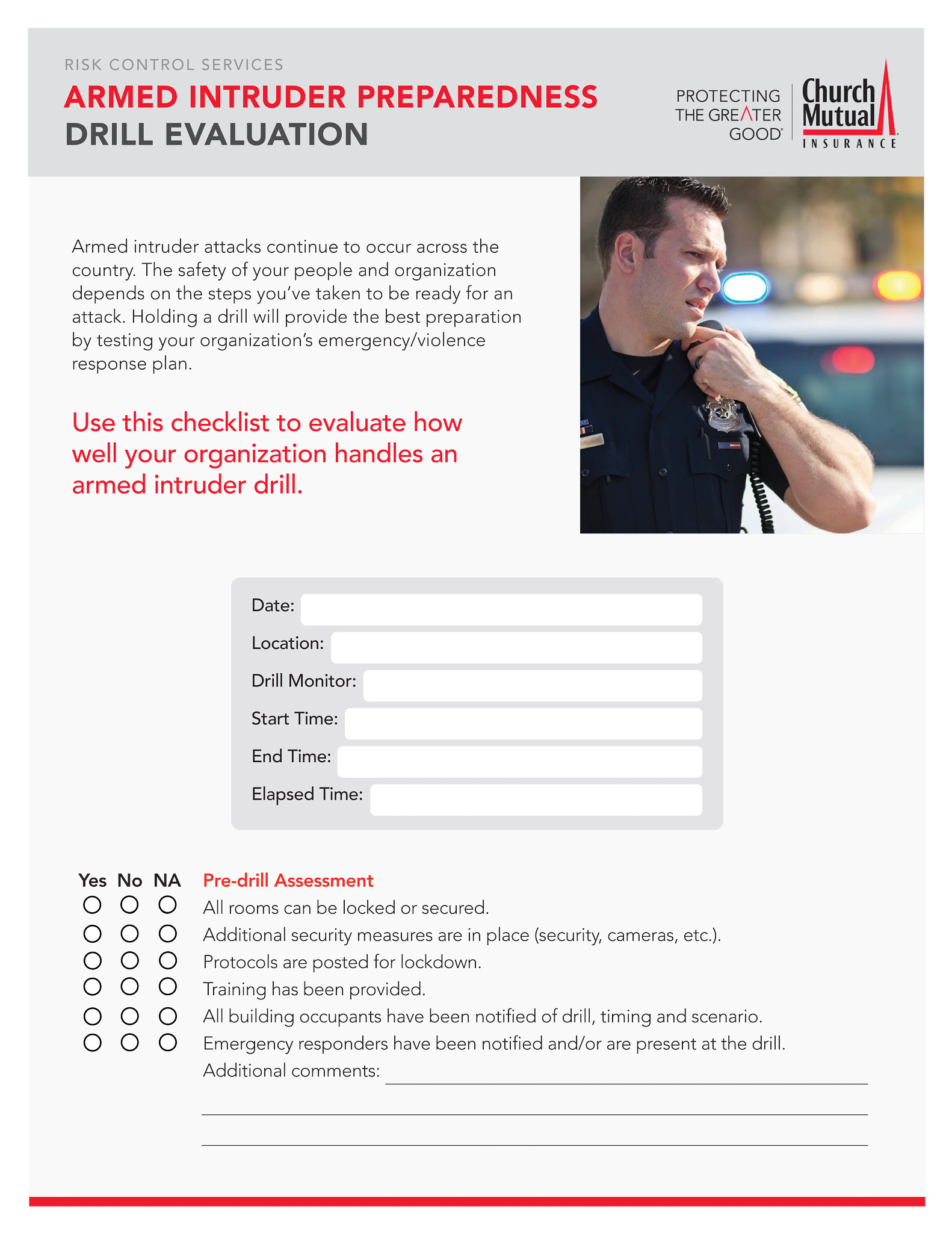
The evaluation tool is designed to be used after completing the tabletop drill. It helps organizations:
Using the evaluation reinforces preparedness as a continuous process rather than a one‑time activity.
General liability insurance provided by Church Mutual could include Catastrophic Violence Response support, which helps reimburse expenses tied to violent incidents injuring two or more people (excluding the perpetrator), regardless of fault. This coverage can help offset costs related to:
Preparedness and coverage work hand-in-hand — combining readiness with financial resilience.
Whether you're initiating preparedness or updating existing strategies, these tools help you move step-by-step toward a safer, more confident response.
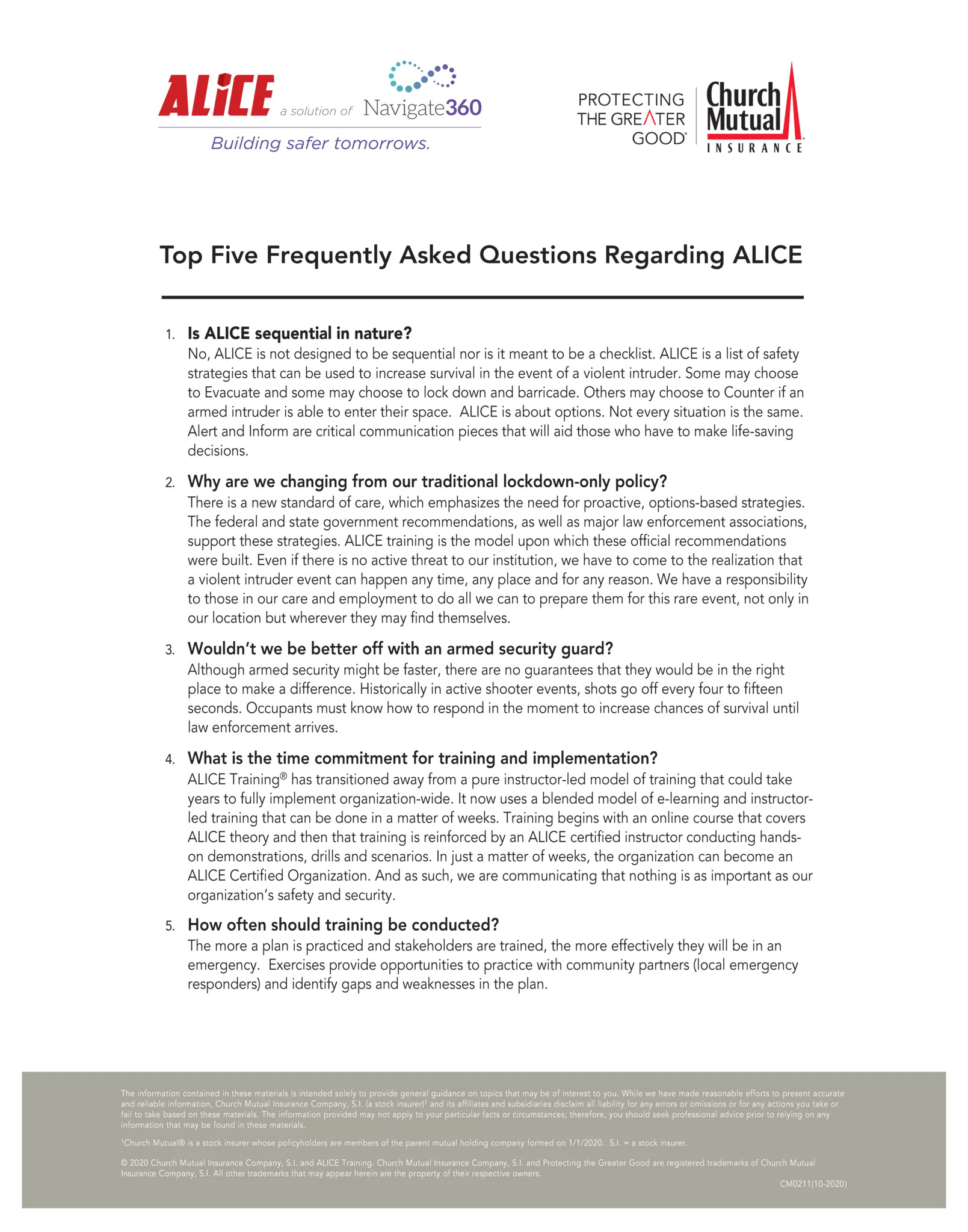
No. While ALICE is a recognized option-based response framework, this toolkit supports any approach your organization adopts.
At least annually — or when facilities, personnel or threat levels change. Exercise with the same care as emergency drills.
Catastrophic Violence Response applies when two or more people are injured. For single-person incidents, standard liability coverage may still apply.
By downloading the complete toolkit, your organization gets:


Active threats — such as armed intruders or mass violence — can happen in any organization. Thoughtful preparation can help your community respond more effectively and reduce harm. The Active Threat Preparedness Toolkit provides tools, exercises and coverage guidance to support sensitive planning, improve readiness and reinforce your ability to act with calm confidence.
This toolkit is designed for mission-driven organizations seeking to improve readiness for violent incidents, including:
Whether you’re just starting or already have safety protocols in place, this toolkit offers resources to build or strengthen plans tailored to your people and facilities.
Violent incidents can occur with little warning and escalate rapidly. Without planning and clarity, organizations may experience:
Proactive preparedness helps organizations:
Preparation is an ongoing commitment — not a one-time task.
The Active Threat Preparedness Toolkit brings together guidance, planning tools and evaluation resources designed to help organizations prepare for, respond to and learn from armed intruder scenarios. Each resource supports a different stage of preparedness and works together as part of an ongoing readiness approach.
This resource helps organizations evaluate different facility security team approaches based on their size, mission, culture and risk profile. It provides guidance to help leaders:
The goal is not to prescribe a single solution, but to support thoughtful, informed planning.
The planning checklist helps organizations assess the foundational elements of armed intruder preparedness. It supports teams in reviewing and strengthening:
The checklist offers a structured way to identify gaps and prioritize next steps.
The tabletop drill walks leadership and staff through a realistic armed intruder scenario in a discussion‑based setting. It helps organizations:
Tabletop drills help turn written plans into actionable readiness.
The evaluation tool is designed to be used after completing the tabletop drill. It helps organizations:
Using the evaluation reinforces preparedness as a continuous process rather than a one‑time activity.
General liability insurance provided by Church Mutual could include Catastrophic Violence Response support, which helps reimburse expenses tied to violent incidents injuring two or more people (excluding the perpetrator), regardless of fault. This coverage can help offset costs related to:
Preparedness and coverage work hand-in-hand — combining readiness with financial resilience.
Whether you're initiating preparedness or updating existing strategies, these tools help you move step-by-step toward a safer, more confident response.
No. While ALICE is a recognized option-based response framework, this toolkit supports any approach your organization adopts.
At least annually — or when facilities, personnel or threat levels change. Exercise with the same care as emergency drills.
Catastrophic Violence Response applies when two or more people are injured. For single-person incidents, standard liability coverage may still apply.
By downloading the complete toolkit, your organization gets:
Active threats — such as armed intruders or mass violence — can happen in any organization. Thoughtful preparation can help your community respond more effectively and reduce harm. The Active Threat Preparedness Toolkit provides tools, exercises and coverage guidance to support sensitive planning, improve readiness and reinforce your ability to act with calm confidence.
Active threats — such as armed intruders or mass violence — can happen in any organization. Thoughtful preparation can help your community respond more effectively and reduce harm. The Active Threat Preparedness Toolkit provides tools, exercises and coverage guidance to support sensitive planning, improve readiness and reinforce your ability to act with calm confidence.
This toolkit is designed for mission-driven organizations seeking to improve readiness for violent incidents, including:
Whether you’re just starting or already have safety protocols in place, this toolkit offers resources to build or strengthen plans tailored to your people and facilities.
Violent incidents can occur with little warning and escalate rapidly. Without planning and clarity, organizations may experience:
Proactive preparedness helps organizations:
Preparation is an ongoing commitment — not a one-time task.
The Active Threat Preparedness Toolkit brings together guidance, planning tools and evaluation resources designed to help organizations prepare for, respond to and learn from armed intruder scenarios. Each resource supports a different stage of preparedness and works together as part of an ongoing readiness approach.
This resource helps organizations evaluate different facility security team approaches based on their size, mission, culture and risk profile. It provides guidance to help leaders:
The goal is not to prescribe a single solution, but to support thoughtful, informed planning.
The planning checklist helps organizations assess the foundational elements of armed intruder preparedness. It supports teams in reviewing and strengthening:
The checklist offers a structured way to identify gaps and prioritize next steps.
The tabletop drill walks leadership and staff through a realistic armed intruder scenario in a discussion‑based setting. It helps organizations:
Tabletop drills help turn written plans into actionable readiness.
The evaluation tool is designed to be used after completing the tabletop drill. It helps organizations:
Using the evaluation reinforces preparedness as a continuous process rather than a one‑time activity.
General liability insurance provided by Church Mutual could include Catastrophic Violence Response support, which helps reimburse expenses tied to violent incidents injuring two or more people (excluding the perpetrator), regardless of fault. This coverage can help offset costs related to:
Preparedness and coverage work hand-in-hand — combining readiness with financial resilience.
Whether you're initiating preparedness or updating existing strategies, these tools help you move step-by-step toward a safer, more confident response.
No. While ALICE is a recognized option-based response framework, this toolkit supports any approach your organization adopts.
At least annually — or when facilities, personnel or threat levels change. Exercise with the same care as emergency drills.
Catastrophic Violence Response applies when two or more people are injured. For single-person incidents, standard liability coverage may still apply.
By downloading the complete toolkit, your organization gets: