Hurricane Isaias:
If you were impacted by the storm, here's
key recovery considerations for the days and weeks ahead
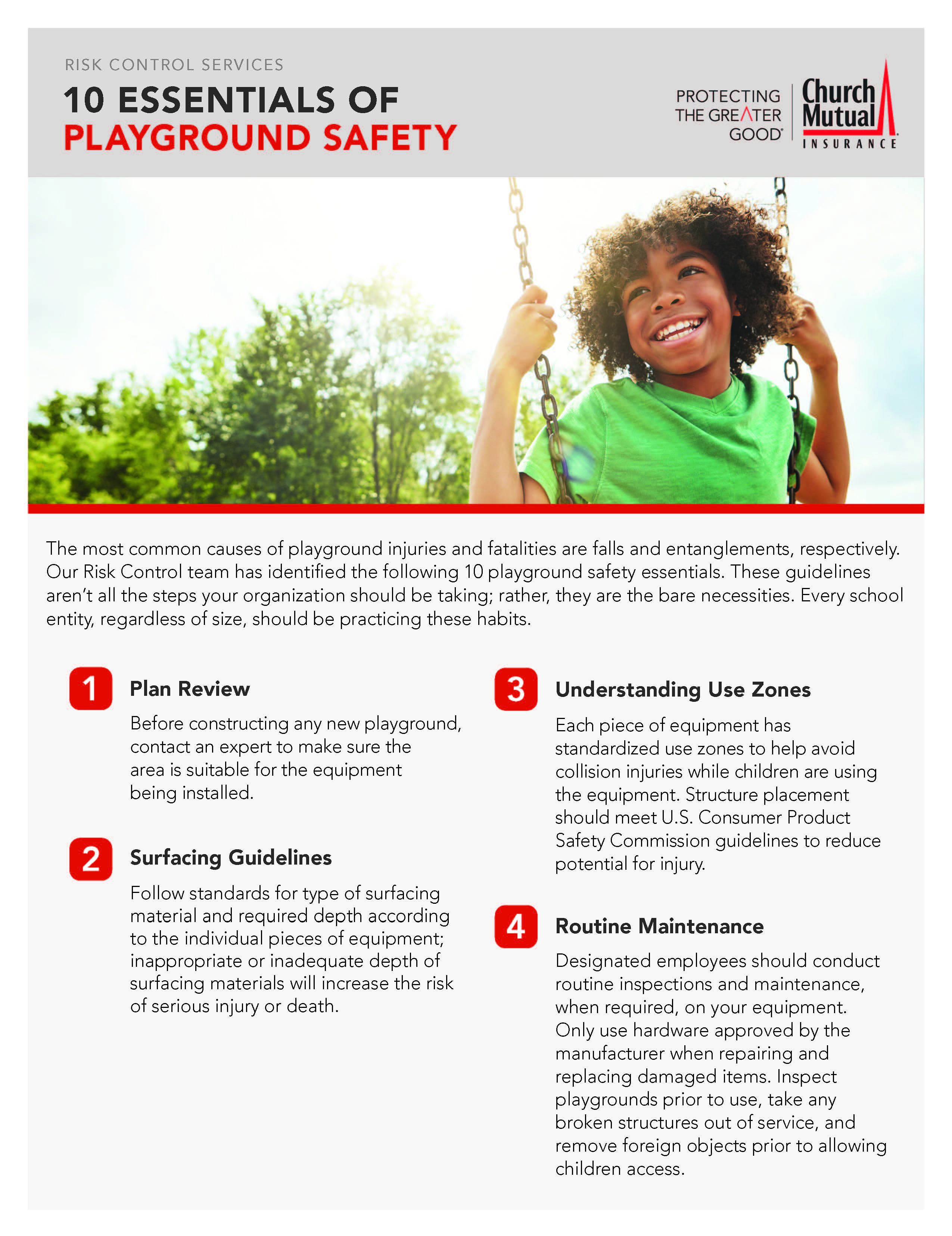
Playgrounds are meant to spark joy, exploration and growth for children. But without the right precautions, they can also be the source of serious injuries. Falls remain the most common cause of playground accidents, while entanglement hazards pose the greatest risk of fatalities.
With so much at stake, schools, childcare centers and other community organizations need a clear framework for keeping play areas safe.
Our 10 Essentials of Playground Safety guide provides just that—a straightforward, expert-driven checklist to help organizations reduce risks, protect children and create safer spaces for play. Below is a preview of what you’ll find inside.
The guide starts with the basics: planning and preparation. Before constructing or upgrading a playground, organizations are encouraged to consult experts to ensure the site is appropriate for the equipment being installed. It also covers how surfacing materials—like mulch, sand or rubber—must meet certain depth and quality standards to effectively cushion falls. Improper surfacing is one of the leading factors in playground injuries, making it a top priority in any safety plan.
Playgrounds aren’t one-size-fits-all. The checklist highlights why separate areas for preschool-aged children (2–5) and school-aged children (5–12) are critical, since equipment standards differ for each group. It also emphasizes the need for use zones—the open spaces around equipment that help prevent collisions when multiple children are climbing, sliding or swinging. Buffer zones between age-specific areas can further minimize accidents.
Even the safest design won’t matter if equipment isn’t maintained. The resource stresses the importance of routine inspections and maintenance, using only manufacturer-approved hardware for repairs and taking damaged equipment out of service immediately. It also reminds organizations to keep an eye out for hazards that can appear over time, such as broken tree limbs, sharp hardware or objects that create impalement risks.
Supervision plays just as important a role as equipment. Monitors should be trained in basic playground safety, maintain a clear line of sight to children and understand how to recognize and address risks in real time.
Some of the most dangerous playground risks aren’t obvious at first glance. The checklist identifies potential entanglement and entrapment hazards, such as gaps in equipment where a child’s head could get stuck, exposed bolt threads or even drawstrings on clothing that can catch on equipment. Environmental factors are also covered, including ensuring proper drainage to prevent pooling water and providing enough shade to avoid burns from overheated surfaces.
Signage is another often-overlooked factor. At a minimum, playgrounds should display clear labels about the manufacturer’s intended age range and the importance of adult supervision. Additional signs may be necessary for specific risks, like surfaces that can heat up in the sun.
This preview highlights just a few essentials, but the complete 10 Essentials of Playground Safety guide delivers all the critical steps in detail. From identifying hidden hazards to establishing stronger supervision practices, it equips your team with actionable strategies to keep children safe while they play.


This guide covers steps that every school should take to protect students, including routine maintenance and ensuring age-appropriate equipment.
Playgrounds are meant to spark joy, exploration and growth for children. But without the right precautions, they can also be the source of serious injuries. Falls remain the most common cause of playground accidents, while entanglement hazards pose the greatest risk of fatalities.
With so much at stake, schools, childcare centers and other community organizations need a clear framework for keeping play areas safe.
Our 10 Essentials of Playground Safety guide provides just that—a straightforward, expert-driven checklist to help organizations reduce risks, protect children and create safer spaces for play. Below is a preview of what you’ll find inside.
The guide starts with the basics: planning and preparation. Before constructing or upgrading a playground, organizations are encouraged to consult experts to ensure the site is appropriate for the equipment being installed. It also covers how surfacing materials—like mulch, sand or rubber—must meet certain depth and quality standards to effectively cushion falls. Improper surfacing is one of the leading factors in playground injuries, making it a top priority in any safety plan.
Playgrounds aren’t one-size-fits-all. The checklist highlights why separate areas for preschool-aged children (2–5) and school-aged children (5–12) are critical, since equipment standards differ for each group. It also emphasizes the need for use zones—the open spaces around equipment that help prevent collisions when multiple children are climbing, sliding or swinging. Buffer zones between age-specific areas can further minimize accidents.
Even the safest design won’t matter if equipment isn’t maintained. The resource stresses the importance of routine inspections and maintenance, using only manufacturer-approved hardware for repairs and taking damaged equipment out of service immediately. It also reminds organizations to keep an eye out for hazards that can appear over time, such as broken tree limbs, sharp hardware or objects that create impalement risks.
Supervision plays just as important a role as equipment. Monitors should be trained in basic playground safety, maintain a clear line of sight to children and understand how to recognize and address risks in real time.
Some of the most dangerous playground risks aren’t obvious at first glance. The checklist identifies potential entanglement and entrapment hazards, such as gaps in equipment where a child’s head could get stuck, exposed bolt threads or even drawstrings on clothing that can catch on equipment. Environmental factors are also covered, including ensuring proper drainage to prevent pooling water and providing enough shade to avoid burns from overheated surfaces.
Signage is another often-overlooked factor. At a minimum, playgrounds should display clear labels about the manufacturer’s intended age range and the importance of adult supervision. Additional signs may be necessary for specific risks, like surfaces that can heat up in the sun.
This preview highlights just a few essentials, but the complete 10 Essentials of Playground Safety guide delivers all the critical steps in detail. From identifying hidden hazards to establishing stronger supervision practices, it equips your team with actionable strategies to keep children safe while they play.
This guide covers steps that every school should take to protect students, including routine maintenance and ensuring age-appropriate equipment.
This guide covers steps that every school should take to protect students, including routine maintenance and ensuring age-appropriate equipment.
Playgrounds are meant to spark joy, exploration and growth for children. But without the right precautions, they can also be the source of serious injuries. Falls remain the most common cause of playground accidents, while entanglement hazards pose the greatest risk of fatalities.
With so much at stake, schools, childcare centers and other community organizations need a clear framework for keeping play areas safe.
Our 10 Essentials of Playground Safety guide provides just that—a straightforward, expert-driven checklist to help organizations reduce risks, protect children and create safer spaces for play. Below is a preview of what you’ll find inside.
The guide starts with the basics: planning and preparation. Before constructing or upgrading a playground, organizations are encouraged to consult experts to ensure the site is appropriate for the equipment being installed. It also covers how surfacing materials—like mulch, sand or rubber—must meet certain depth and quality standards to effectively cushion falls. Improper surfacing is one of the leading factors in playground injuries, making it a top priority in any safety plan.
Playgrounds aren’t one-size-fits-all. The checklist highlights why separate areas for preschool-aged children (2–5) and school-aged children (5–12) are critical, since equipment standards differ for each group. It also emphasizes the need for use zones—the open spaces around equipment that help prevent collisions when multiple children are climbing, sliding or swinging. Buffer zones between age-specific areas can further minimize accidents.
Even the safest design won’t matter if equipment isn’t maintained. The resource stresses the importance of routine inspections and maintenance, using only manufacturer-approved hardware for repairs and taking damaged equipment out of service immediately. It also reminds organizations to keep an eye out for hazards that can appear over time, such as broken tree limbs, sharp hardware or objects that create impalement risks.
Supervision plays just as important a role as equipment. Monitors should be trained in basic playground safety, maintain a clear line of sight to children and understand how to recognize and address risks in real time.
Some of the most dangerous playground risks aren’t obvious at first glance. The checklist identifies potential entanglement and entrapment hazards, such as gaps in equipment where a child’s head could get stuck, exposed bolt threads or even drawstrings on clothing that can catch on equipment. Environmental factors are also covered, including ensuring proper drainage to prevent pooling water and providing enough shade to avoid burns from overheated surfaces.
Signage is another often-overlooked factor. At a minimum, playgrounds should display clear labels about the manufacturer’s intended age range and the importance of adult supervision. Additional signs may be necessary for specific risks, like surfaces that can heat up in the sun.
This preview highlights just a few essentials, but the complete 10 Essentials of Playground Safety guide delivers all the critical steps in detail. From identifying hidden hazards to establishing stronger supervision practices, it equips your team with actionable strategies to keep children safe while they play.