Hurricane Isaias:
If you were impacted by the storm, here's
key recovery considerations for the days and weeks ahead
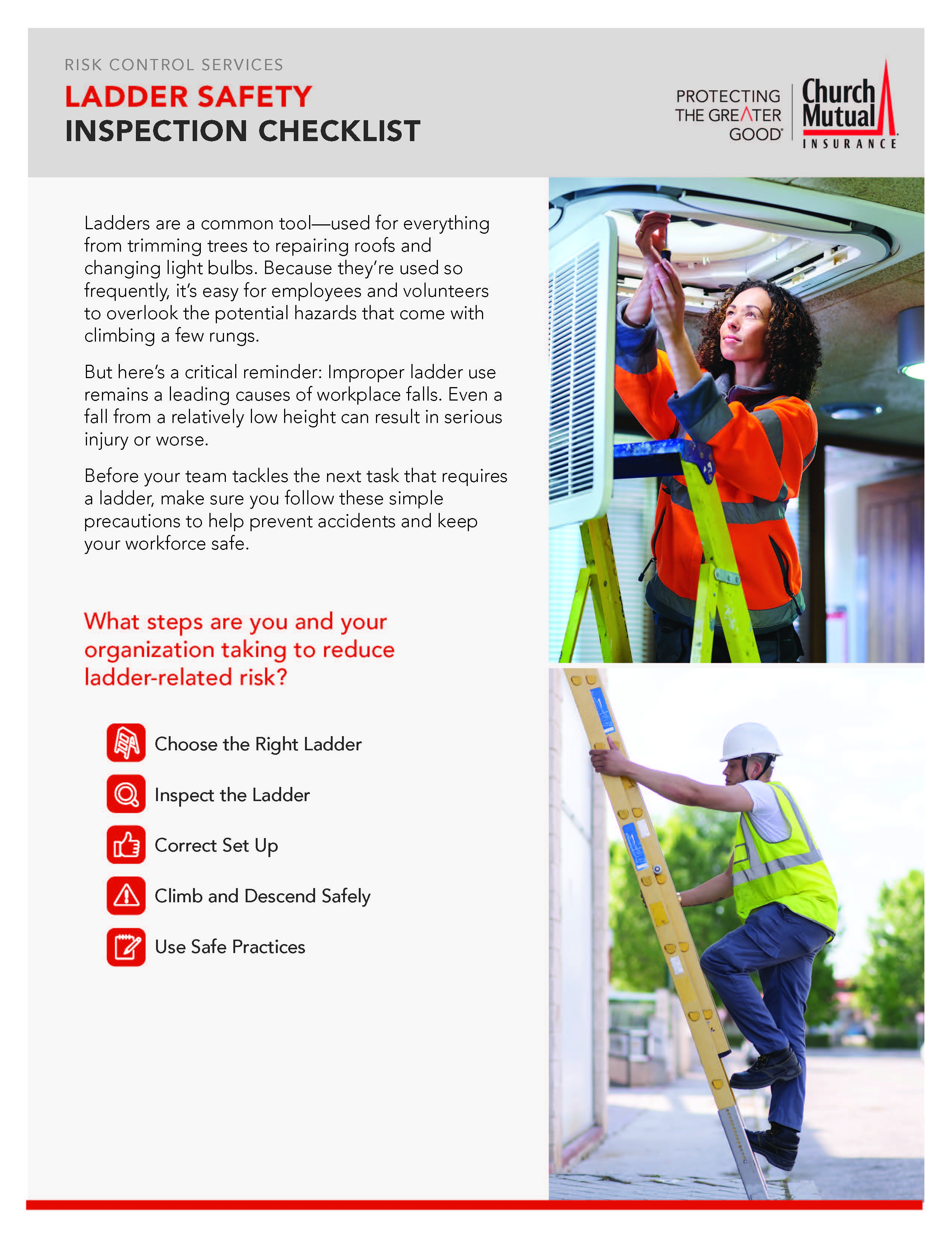
From hanging decorations to everyday building maintenance, ladders are a go-to tool for organizations of all kinds. But with frequent use comes hidden risk: improper ladder use is one of the leading causes of workplace falls, and even a short fall can result in serious injuries. The good news is that most accidents can be prevented with the right precautions.
Our Ladder Safety Checklist provides simple, practical steps to help you and your team use ladders safely, protect your people and reduce liability. Here’s a look at what you’ll find inside.
Because ladder use is so common, it’s easy to underestimate the hazards. Falls often happen during routine tasks—changing a light bulb, painting a wall or trimming a tree—when people rush or take shortcuts. The checklist underscores the importance of slowing down, choosing the right ladder and maintaining three points of contact. These small habits go a long way in preventing serious accidents.
The guide explains how to match the ladder to the job, whether you need a sturdy stepladder for indoor projects or an extension ladder for outdoor repairs. It also cautions against relying on outdated wooden ladders, which can be unsafe, and recommends more durable fiberglass options.
Equally important is knowing your ladder’s duty rating—the maximum safe load, including the user’s weight—plus any tools or materials. The guide recommends investing in the highest rating you can, ensuring versatility and safety across projects.
Inspection is another critical step. Before climbing, check for:
The checklist includes a printable inspection form to help organizations tag unsafe ladders and remove them from service quickly.
Safe use starts with proper setup. The resource details how to carry and position ladders without creating hazards, as well as the importance of level, clutter-free ground. For extension ladders, it stresses the “1:4 ratio”—one foot of distance from the wall for every four feet of ladder height—and the need to extend three feet above a roofline for stability. It also recommends tying off ladders whenever possible to prevent shifting.
Even with the right ladder and placement, safe behavior is critical. The checklist reminds users to:
It also highlights often-overlooked practices, such as locking doors near ladders to prevent someone from opening them into the work area.
This preview covers just a fraction of what’s inside. The full Ladder Safety Checklist provides illustrated diagrams, detailed inspection guides and reminders for proper storage and disposal of damaged ladders. Whether you manage a large facility or a small team, the resource offers actionable steps to help reduce risk and keep everyone safe.


This practical guide outlines essential ladder safety practices. It covers ladder selection, inspection, setup and proper usage, and includes a detailed inspection checklist to help ensure compliance and prevent falls.
From hanging decorations to everyday building maintenance, ladders are a go-to tool for organizations of all kinds. But with frequent use comes hidden risk: improper ladder use is one of the leading causes of workplace falls, and even a short fall can result in serious injuries. The good news is that most accidents can be prevented with the right precautions.
Our Ladder Safety Checklist provides simple, practical steps to help you and your team use ladders safely, protect your people and reduce liability. Here’s a look at what you’ll find inside.
Because ladder use is so common, it’s easy to underestimate the hazards. Falls often happen during routine tasks—changing a light bulb, painting a wall or trimming a tree—when people rush or take shortcuts. The checklist underscores the importance of slowing down, choosing the right ladder and maintaining three points of contact. These small habits go a long way in preventing serious accidents.
The guide explains how to match the ladder to the job, whether you need a sturdy stepladder for indoor projects or an extension ladder for outdoor repairs. It also cautions against relying on outdated wooden ladders, which can be unsafe, and recommends more durable fiberglass options.
Equally important is knowing your ladder’s duty rating—the maximum safe load, including the user’s weight—plus any tools or materials. The guide recommends investing in the highest rating you can, ensuring versatility and safety across projects.
Inspection is another critical step. Before climbing, check for:
The checklist includes a printable inspection form to help organizations tag unsafe ladders and remove them from service quickly.
Safe use starts with proper setup. The resource details how to carry and position ladders without creating hazards, as well as the importance of level, clutter-free ground. For extension ladders, it stresses the “1:4 ratio”—one foot of distance from the wall for every four feet of ladder height—and the need to extend three feet above a roofline for stability. It also recommends tying off ladders whenever possible to prevent shifting.
Even with the right ladder and placement, safe behavior is critical. The checklist reminds users to:
It also highlights often-overlooked practices, such as locking doors near ladders to prevent someone from opening them into the work area.
This preview covers just a fraction of what’s inside. The full Ladder Safety Checklist provides illustrated diagrams, detailed inspection guides and reminders for proper storage and disposal of damaged ladders. Whether you manage a large facility or a small team, the resource offers actionable steps to help reduce risk and keep everyone safe.
This practical guide outlines essential ladder safety practices. It covers ladder selection, inspection, setup and proper usage, and includes a detailed inspection checklist to help ensure compliance and prevent falls.
This practical guide outlines essential ladder safety practices. It covers ladder selection, inspection, setup and proper usage, and includes a detailed inspection checklist to help ensure compliance and prevent falls.
From hanging decorations to everyday building maintenance, ladders are a go-to tool for organizations of all kinds. But with frequent use comes hidden risk: improper ladder use is one of the leading causes of workplace falls, and even a short fall can result in serious injuries. The good news is that most accidents can be prevented with the right precautions.
Our Ladder Safety Checklist provides simple, practical steps to help you and your team use ladders safely, protect your people and reduce liability. Here’s a look at what you’ll find inside.
Because ladder use is so common, it’s easy to underestimate the hazards. Falls often happen during routine tasks—changing a light bulb, painting a wall or trimming a tree—when people rush or take shortcuts. The checklist underscores the importance of slowing down, choosing the right ladder and maintaining three points of contact. These small habits go a long way in preventing serious accidents.
The guide explains how to match the ladder to the job, whether you need a sturdy stepladder for indoor projects or an extension ladder for outdoor repairs. It also cautions against relying on outdated wooden ladders, which can be unsafe, and recommends more durable fiberglass options.
Equally important is knowing your ladder’s duty rating—the maximum safe load, including the user’s weight—plus any tools or materials. The guide recommends investing in the highest rating you can, ensuring versatility and safety across projects.
Inspection is another critical step. Before climbing, check for:
The checklist includes a printable inspection form to help organizations tag unsafe ladders and remove them from service quickly.
Safe use starts with proper setup. The resource details how to carry and position ladders without creating hazards, as well as the importance of level, clutter-free ground. For extension ladders, it stresses the “1:4 ratio”—one foot of distance from the wall for every four feet of ladder height—and the need to extend three feet above a roofline for stability. It also recommends tying off ladders whenever possible to prevent shifting.
Even with the right ladder and placement, safe behavior is critical. The checklist reminds users to:
It also highlights often-overlooked practices, such as locking doors near ladders to prevent someone from opening them into the work area.
This preview covers just a fraction of what’s inside. The full Ladder Safety Checklist provides illustrated diagrams, detailed inspection guides and reminders for proper storage and disposal of damaged ladders. Whether you manage a large facility or a small team, the resource offers actionable steps to help reduce risk and keep everyone safe.


.jpg)